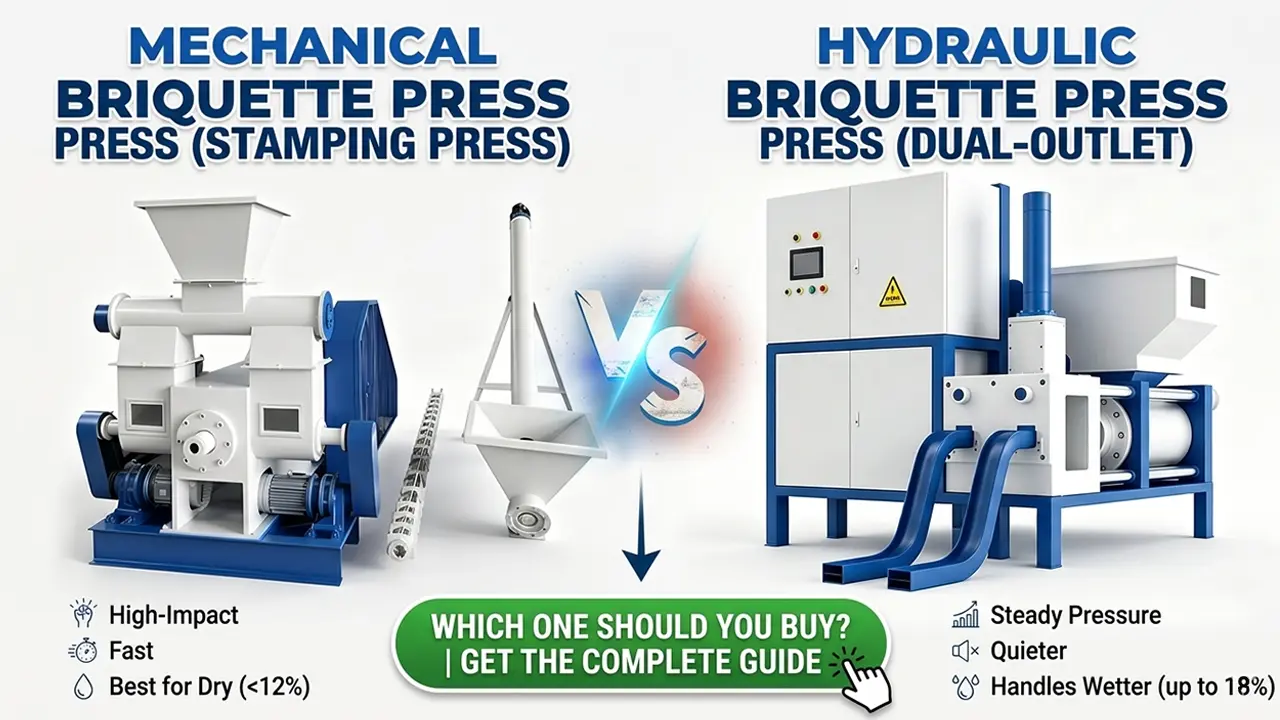
Mechanical vs Hydraulic Briquette Press: 7 Key Differences and Which One You Should Buy
Choosing between a mechanical and a hydraulic briquette press directly affects your investment cost, electricity expenses, product quality, and daily maintenance. This article provides a side‑by‑side comparison across seven key dimensions: purchase cost, energy consumption, maintenance frequency, raw material adaptability, briquette density, production capacity, and noise/vibration. It also includes a real‑world decision matrix and a 3‑year Total Cost of Ownership (TCO) calculation. Whether you run a small woodworking shop, a farm, or a large‑scale biomass fuel plant, you will find the right solution here. A free consultation for machine selection is also available at the end of the article.
Choosing the right briquette press is one of the most important decisions for your biomass business. Get it wrong, and you’ll face high energy bills, frequent breakdowns, or poor briquette quality. This guide breaks down 7 critical differences between mechanical and hydraulic briquette presses, gives you a simple decision matrix, and helps you pick the right machine for your raw material, budget, and production target.
1. How Each Type Works – In Simple Terms
Before comparing, let’s quickly understand the basic working principle.
- Mechanical briquette press (also called punch press or stamping press)
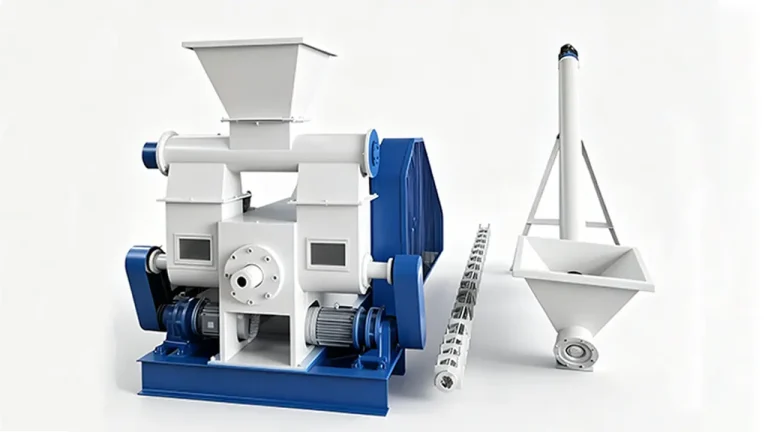
Uses a flywheel and eccentric crank mechanism to generate a high-impact, short-stroke force. The punch rams the material into a die at very high speed. Think of it like a powerful stamping machine. - Hydraulic briquette press
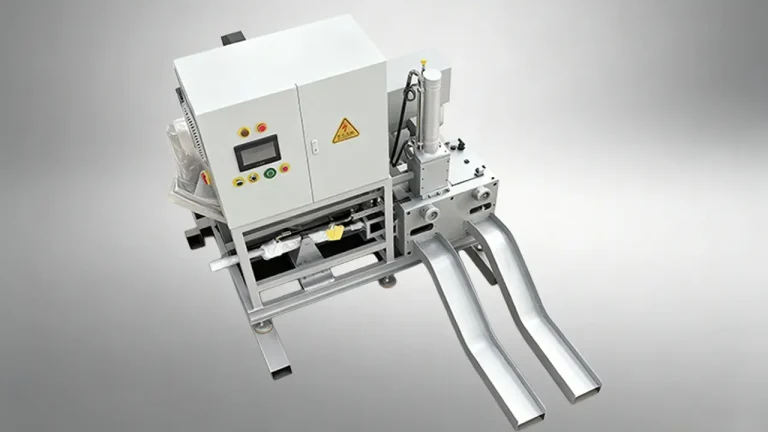
Uses a hydraulic pump and cylinder to apply steady, continuous pressure over a longer stroke. The pressure is fully adjustable and remains constant during the entire compression cycle.
Key takeaway: Mechanical = impact force (fast & sharp)
Hydraulic = sustained force (slow & steady)
2. The 7 Key Differences – At a Glance
| # | Comparison Aspect | Mechanical Press | Hydraulic Press |
|---|---|---|---|
| 1 | Initial purchase cost | Low ($3,000 – $15,000) | Higher ($10,000 – $50,000+) |
| 2 | Energy consumption (per ton) | Higher (~80-120 kWh/ton) | Lower (~40-70 kWh/ton) |
| 3 | Maintenance frequency | Low (but wear parts like dies and punches wear out faster) | Medium (hydraulic oil, seals, and pump need periodic attention) |
| 4 | Raw material flexibility | Best for dry materials (<12% moisture) | Can handle slightly wetter materials (up to 18% moisture) |
| 5 | Briquette density | Medium (0.9 – 1.1 g/cm³) | High (1.2 – 1.4 g/cm³) |
| 6 | Production capacity range | 100 – 800 kg/h | 200 – 3,000+ kg/h |
| 7 | Noise & vibration level | High (needs solid foundation) | Low (quieter, less vibration) |
Now let’s dive deeper into each point.
Difference #1: Initial Purchase Cost – What Your Wallet Sees First
Mechanical:
A new mechanical briquette press typically costs between $3,000 and $15,000 depending on capacity and brand. Small used units can be found for under $2,000. This makes it the go‑to choice for startups, small workshops, and farmers with limited capital.
Hydraulic:
Hydraulic models start around $10,000 for a small unit (200 kg/h) and can go above $50,000 for industrial lines (2‑3 t/h). The higher cost comes from the hydraulic pump, valves, oil tank, and precision control system.
What this means for you: If your budget is under $10,000 and you are testing the market, a mechanical press is more accessible. But remember – initial cost is only part of the total ownership cost (more on that later).
Difference #2: Energy Consumption – Your Monthly Electricity Bill
Mechanical:
The flywheel keeps spinning continuously, so the electric motor runs at full load most of the time. For each ton of briquettes, expect 80‑120 kWh. At $0.12/kWh, that’s $9.6‑$14.4 per ton just for electricity.
Hydraulic:
The hydraulic pump only works when pressure builds up. During the holding phase, the motor draws very low current. Typical consumption is 40‑70 kWh/ton – roughly 30‑50% less than mechanical.
Example: Producing 5 tons per day, 300 days/year →
Mechanical: 5 × 100 kWh × 300 = 150,000 kWh/year
Hydraulic: 5 × 55 kWh × 300 = 82,500 kWh/year
Annual saving with hydraulic = 67,500 kWh ≈ $8,100 (at $0.12/kWh)
For a medium‑sized operation, the electricity saving alone can pay back the higher purchase price within 1‑2 years.
Difference #3: Maintenance Frequency & Cost
Mechanical:
Fewer moving parts – basically a motor, flywheel, bearings, and the die/punch set. Routine maintenance is simple (greasing bearings, checking belts).
But – the impact force wears out dies and punches much faster. A typical die set for a mechanical press lasts 200‑400 hours when processing abrasive materials like rice husks or sawdust with sand. Replacement cost: $300‑$800 per set.
Hydraulic:
More complex system: hydraulic pump, valves, hoses, seals, oil filter. You need to change hydraulic oil every 1,000‑2,000 hours and check seals for leaks. Wear parts (dies, rollers) last longer because the pressure is constant rather than impact – typically 800‑1,500 hours.
However, a major hydraulic component failure (e.g., pump or cylinder) can be expensive to repair ($1,000‑$3,000).
Bottom line: Mechanical = cheaper everyday maintenance but more frequent die changes. Hydraulic = less frequent die changes but higher risk of hydraulic system repair costs.
Difference #4: Raw Material Flexibility – What Can You Feed?
Mechanical press:
Needs dry material – ideally below 12% moisture. If your sawdust or straw is too wet (>14%), the briquettes will crack or won’t form at all. Also, particle size must be very uniform (usually through a hammer mill with 6‑8 mm screen).
Hydraulic press:
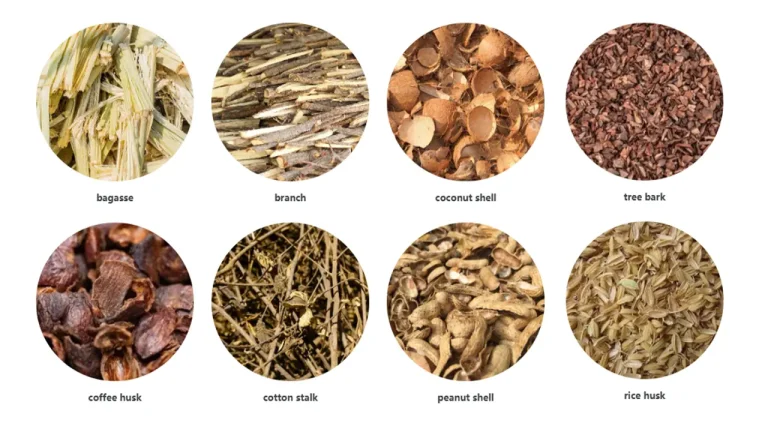
Can handle moisture up to 18% (some models even 20%) because the longer, steady pressure squeezes out extra water. Particle size can be slightly less uniform. This is a huge advantage if you work with fresh agricultural residues (e.g., wet corn stalks, coffee husks after depulping).
Real‑world advice: If your material often arrives with 15‑18% moisture (e.g., during rainy season), a hydraulic press will save you from buying an expensive dryer.
Difference #5: Briquette Density – Quality and Market Price
Mechanical:
Typical density range: 0.9 – 1.1 g/cm³. Briquettes are solid but may have small cracks or lower mechanical strength. They burn well but produce more ash and dust during transport.
Hydraulic:
Density easily reaches 1.2 – 1.4 g/cm³ (some industrial models go to 1.5). Higher density means:
- Higher calorific value per volume (more energy in the same bag)
- Less dust and crumbling during shipping
- Better price – high‑density briquettes can sell for 20‑30% more than low‑density ones in markets like Europe and Japan.
Example: A customer buying 500 tons/year at $150/ton (low density) vs $190/ton (high density) earns an extra $20,000/year – enough to justify a hydraulic press.
Difference #6: Production Capacity – Scaling Your Business
Mechanical:
Most models are small to medium: 100 kg/h up to 800 kg/h. Larger mechanical presses exist but become very heavy, noisy, and expensive to maintain. Suitable for micro‑enterprises, small farms, or one‑man workshops.
Hydraulic:
From 200 kg/h (small single‑cylinder) to 3,000+ kg/h (multi‑cylinder industrial systems). If you plan to supply biomass power plants or large boilers, a hydraulic press is the only realistic choice.
Match to your goal:
- Home heating or local selling under 2 t/day → mechanical works fine.
- Commercial production 5‑20 t/day → you need hydraulic.
Difference #7: Noise & Vibration – Workplace Comfort
Mechanical:
Loud impact noise – often 95‑105 dB near the machine. Strong vibration requires a concrete foundation (at least 10‑15 cm thick) to prevent cracking floors or shifting. Not suitable for residential areas or enclosed workshops without ear protection.
Hydraulic:
Quiet operation – around 70‑80 dB (similar to a washing machine). Minimal vibration; can be placed on a regular industrial concrete floor without special foundation. Much better for working environment and neighboring businesses.
3. Total Cost of Ownership (TCO) Comparison – 3‑Year Example
Let’s put numbers on a realistic scenario:
Assumptions:
- Output: 500 kg/h, 8 hours/day, 300 days/year → 1,200 tons/year
- Electricity: $0.12/kWh
- Labor and other costs excluded (same for both)
| Cost Component | Mechanical Press | Hydraulic Press |
|---|---|---|
| Purchase price | $8,000 | $18,000 |
| Annual electricity (85 kWh/ton for mech, 55 for hyd) | 1,200t × 85 = 102,000 kWh → $12,240/year | 1,200t × 55 = 66,000 kWh → $7,920/year |
| Annual die/roller replacement | $2,000 (4 sets per year) | $800 (1 set per year) |
| Annual hydraulic oil & seals | $0 | $600 |
| 3‑year total | $8,000 + 3×($12,240+$2,000) = $50,720 | $18,000 + 3×($7,920+$800+$600) = $46,960 |
Conclusion: Despite higher purchase price, the hydraulic press saves $3,760 over 3 years (and the gap widens with higher production volumes). Plus, you get higher density briquettes that sell for a premium.
4. Decision Matrix – Which One Should YOU Buy?
Use this simple table based on your situation:
| Your Situation | Recommended Press |
|---|---|
| Startup / very tight budget (<$6,000) | Used mechanical or small new mechanical |
| Processing dry sawdust or wood shavings (<12% moisture) | Mechanical is fine and cost‑effective |
| Processing agricultural residues (straw, husks, stalks) with variable moisture | Hydraulic – better tolerance to moisture |
| Targeting high‑density briquettes for export or industrial boilers | Hydraulic (1.2+ g/cm³ required) |
| Daily output <2 tons | Either, but mechanical is cheaper upfront |
| Daily output 2‑10 tons | Hydraulic – lower energy and die cost |
| Noise and vibration are concerns (near homes or offices) | Hydraulic |
| You have cheap electricity and free material – just need lowest entry price | Mechanical |
Quick decision flow:
Is your material consistently below 12% moisture?
├─ YES → Do you produce more than 2 tons/day?
│        ├─ YES → Hydraulic (saves energy)
│        └─ NO  → Mechanical (cheaper to buy)
└─ NO  (material often 13‑18%) → Hydraulic (must have)
5. Three Common Mistakes to Avoid
❌ Mistake 1: “Hydraulic is always better”
Not true. For a small woodshop generating 200‑300 kg of dry sawdust per day, a mechanical press is perfectly adequate and much cheaper. Don’t over‑invest.
❌ Mistake 2: “Mechanical presses don’t need maintenance”
They do. The die and punch wear quickly – ignoring them leads to poor briquette quality and jamming. Always keep spare dies.
❌ Mistake 3: “I can run any moisture with hydraulic”
No. Above 18‑20%, even hydraulic presses will struggle. You still need a dryer or sun drying for very wet material.
6. Real‑World Case Examples
Case A – Woodworking shop in Malaysia
Material: Dry sawdust (8‑10% moisture), 1 ton/day.
They bought a mechanical press for $5,000. 2 years later, they have saved enough electricity? Actually, electricity is cheap locally, so the mechanical works fine. They replace dies every 6 months. ROI: 9 months.
Case B – Agricultural cooperative in Ukraine
Material: Corn stalks and wheat straw (15‑18% moisture), 8 tons/day in season.
They chose a hydraulic press ($32,000). Energy cost is 40% lower than a mechanical would have been, and they don’t need to dry the straw. Briquettes meet ENplus standards and sell to EU buyers at a premium. ROI: 14 months.
Case C – Small farm in Kenya
Material: Dry rice husks (10% moisture), 400 kg/day.
Bought a small used mechanical press for $2,500. Produces briquettes for cooking and sells surplus. Perfect fit for their budget and scale.
7. Still Not Sure? Let Us Help You Choose
Every raw material is different. We have helped over 200 customers worldwide select the right briquette press – mechanical or hydraulic – based on their actual material samples and production goals.
Here’s what you can do:
- Send us a short video (30 seconds) of your raw material – show moisture, particle size, and any contamination.
- Tell us your target daily output in kilograms or tons.
- Get a free recommendation within 24 hours – no obligation.
👉 Click here to request your free consultation (or use the form below)
📧 Email: [email protected]
💬 WhatsApp: +86 182 3698 6068
📞 Call: +86 182 3698 6068
Ready to Make a Decision?
If you already know which type fits you, browse our best‑selling models:
- For mechanical presses → [View Models for Dry Sawdust / Wood Chips]
- For hydraulic presses → [View Industrial Hydraulic Briquette Presses]
We offer spare parts kits, training manuals, and worldwide shipping.
All prices are estimates; actual quotes depend on configuration, capacity, and shipping destination.