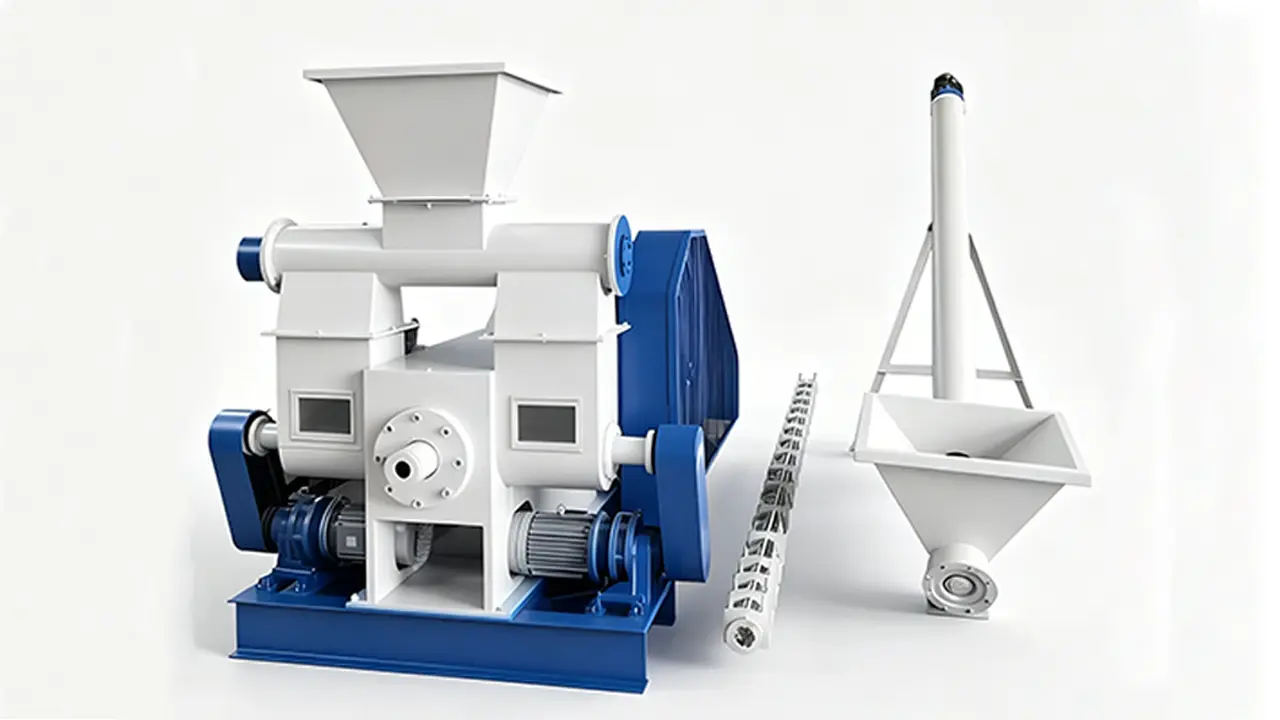
Mechanical Biomass Briquetting Production Line Solution | High-Pressure Industrial Press Briquette System
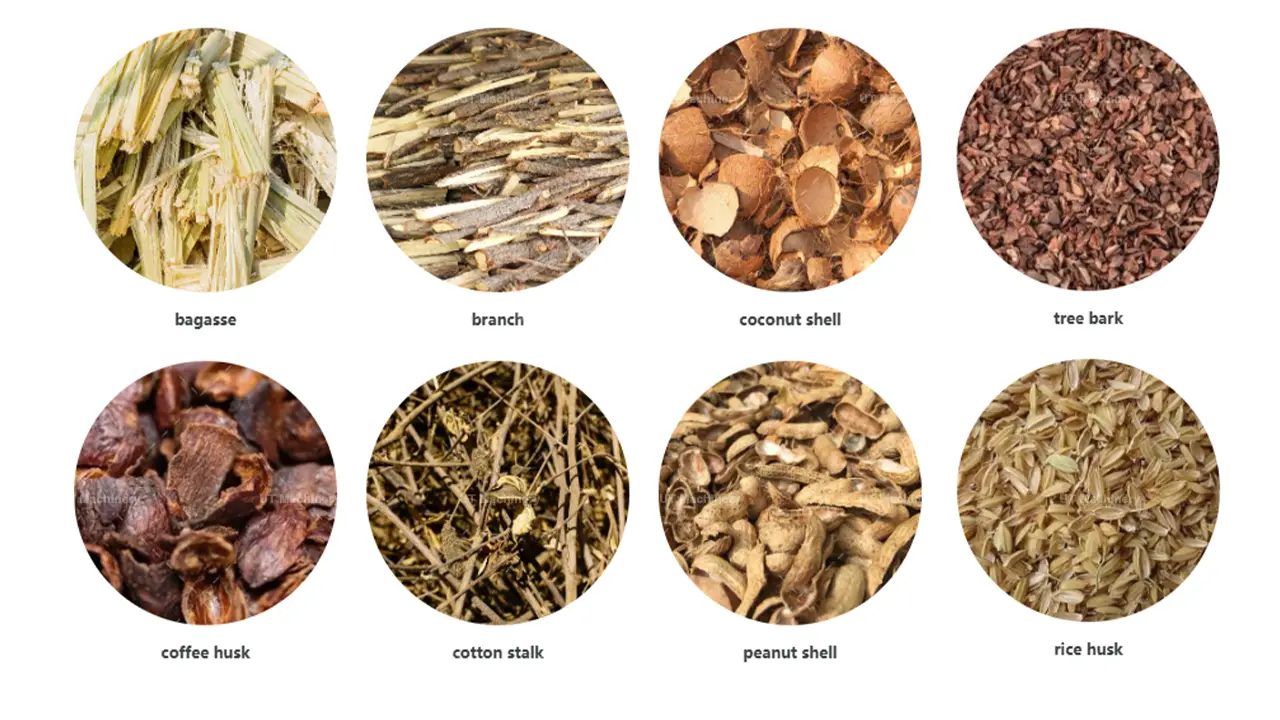
UT Machinery’s Mechanical Biomass Briquetting Production Line converts agricultural and forestry waste—such as sawdust, straw, rice husk, and wood chips—into high-density fuel briquettes. Featuring crushing, drying, controlled feeding, and high-pressure mechanical compression, this turnkey solution ensures stable briquette density, consistent shape, low maintenance, and continuous 24/7 industrial operation. Ideal for industrial boilers, heating systems, and biomass fuel applications.
Introduction: Why Mechanical Briquetting Systems Are Critical in Biomass Fuel Production
In biomass fuel manufacturing, many production failures come from unstable material compression rather than raw material type itself.
Common problems in traditional systems include:
- Uneven briquette density and cracking after cooling
- Low forming strength under unstable pressure
- High moisture sensitivity causing loose or broken blocks
- Frequent wear in forming components
- Inconsistent output shape in continuous production
These issues are especially common in agricultural waste briquette production and industrial biomass fuel plants where material properties vary significantly.
👉 A mechanical biomass briquetting production line solves these issues through high-pressure compression molding instead of screw extrusion or thermal bonding systems.
Complete Mechanical Biomass Briquetting Production Line Workflow
Our system integrates crushing, drying, controlled feeding, and mechanical high-pressure pressing into a stable production line.
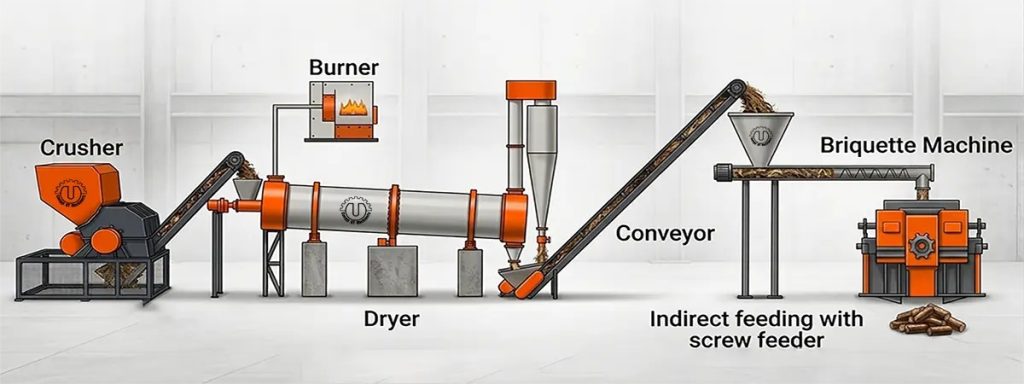
1. Crushing System – Uniform Particle Preparation
Equipment: Industrial Hammer Mill / Crusher
Function:
- Converts wood logs, straw, rice husk, and biomass waste into fine particles
- Output size: 3–5 mm
Why it matters:
Uniform particle size ensures stable compression and prevents internal cracking during molding.
2. Drying System – Moisture Stabilization Control
Equipment: Rotary Drum Dryer + Heating System
Process:
Biomass material is continuously dried before entering the press system.
Why this range matters:
- Too high → weak bonding and loose briquettes
- Too low → reduced plastic deformation under pressure
Critical moisture range:
👉 Moisture stability directly affects final briquette strength.
3. Feeding System – Stable Material Delivery
Equipment: Controlled Feeding Conveyor System
Function:
- Ensures consistent and uniform feeding into pressing chamber
- Prevents overload or material interruption
- Maintains stable production rhythm
👉 Stable feeding = stable compression quality
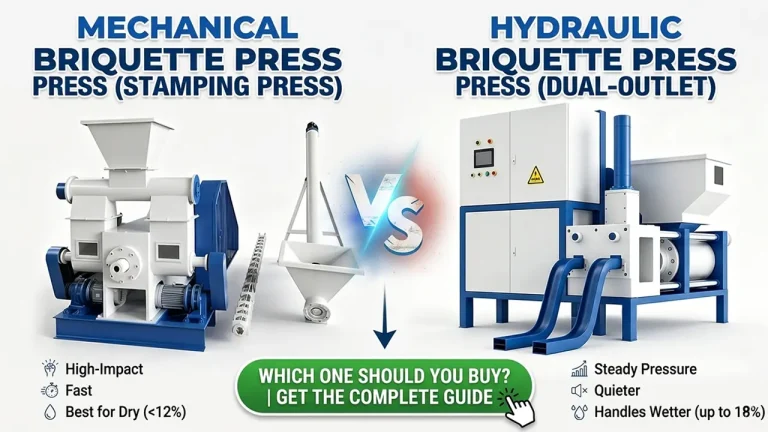
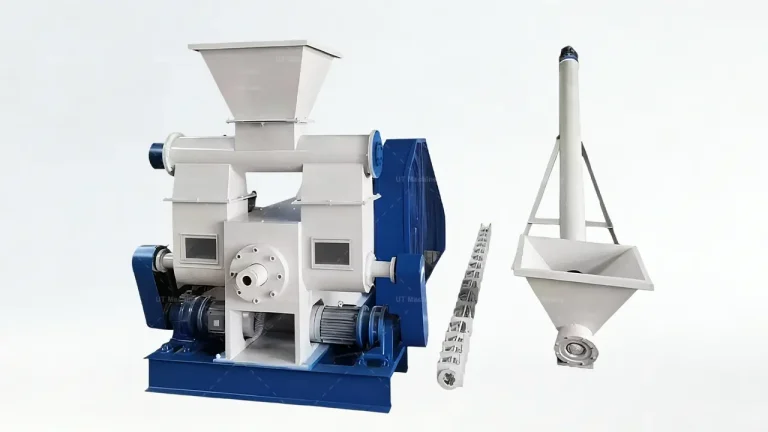
4. Mechanical High-Pressure Pressing System
Equipment: Heavy-Duty Mechanical Briquetting Press
Working principle:
The system applies strong mechanical force to compress biomass into dense fuel blocks through plastic deformation and fiber rearrangement.
Pressure relationship:
Output characteristics:
- High-density solid briquettes
- Stable shape after cooling
- Strong structural integrity for combustion
👉 This is a pure mechanical densification process (not thermal extrusion)
Technical Advantages of UT Mechanical Briquetting Line
High-Pressure Stable Forming System
- Ensures uniform density across every briquette
- Prevents cracking and deformation
No Screw Wear System Design
- No continuous friction extrusion system
- Reduced long-term maintenance cost
Strong Material Adaptability
- Handles sawdust, straw, rice husk, wood chips
- Stable performance even with raw material variation
Industrial Continuous Operation
- Designed for long-hour production cycles
- Stable output under heavy load conditions
Dust-Control & Clean Production
- Integrated dust collection system
- Industrial safety compliance ready
Mechanical Biomass Briquetting Machine Technical Specifications
- Production capacity: 500 kg/h – 5 ton/h
- Raw materials: sawdust, straw, rice husk, wood waste, agricultural residue
- Final product: solid biomass fuel briquettes
- Forming method: mechanical high-pressure compression molding
- Operation mode: continuous industrial production
Applications of Mechanical Biomass Briquettes
01
Industrial Energy Use
- Boiler fuel replacement for coal
- Cement and brick factory heating systems
- Industrial thermal energy supply
02
Civil Heating
- Fireplace and stove fuel
- Clean biomass heating alternative
03
Waste Recycling Industry
- Agricultural residue recycling
- Forestry waste reuse systems
Why Choose UT Machinery Mechanical Briquetting Solution
Industrial Engineering Testing System
Each production line is tested for:
- Pressure stability under load
- Continuous 24-hour operation simulation
- Structural fatigue resistance
- Motor load efficiency testing
Global Project Experience
Installed systems across:
- India
- Turkey
- Mexico
- Southeast Asia
- Eastern Europe
We optimize systems based on:
- Local biomass type
- Moisture conditions
- Production scale requirements
Customized Production Line Design
We provide:
- Full plant CAD layout design
- Material flow optimization
- Capacity planning from small to industrial scale
Final Conclusion
A mechanical biomass briquetting production line is a high-pressure densification system designed for stable industrial fuel production.
Its performance depends on:
- Controlled particle size
- Stable moisture range
- Continuous feeding system
- High-pressure mechanical compression
👉 Compared with screw extrusion systems, mechanical pressing offers:
- Lower wear cost
- Higher structural strength stability
- Better adaptability to raw material variation
Start Your Biomass Briquetting Project with UT Machinery
Tell us your raw material and capacity requirement. Our engineering team will design a complete mechanical briquetting production line solution for your project.
FAQ – Mechanical Biomass Briquetting Production Line
❓ What is the difference between mechanical press and screw briquetting?
Mechanical press uses high-pressure compression, while screw systems use continuous extrusion and friction heat.
❓ What is the ideal moisture for mechanical briquetting?
.
❓ Is this system suitable for continuous production?
Yes, it is designed for industrial continuous operation with stable pressure control.
❓ What raw materials are suitable?
Sawdust, rice husk, straw, wood chips, agricultural waste.