Automatic Production Lines

Fully automatic briquetting production lines tailored for large-scale operations. We provide integrated solutions from raw material drying and crushing to final briquette pressing and cooling. Achieve maximum efficiency and lower labor costs with our turnkey briquetting plant engineering.

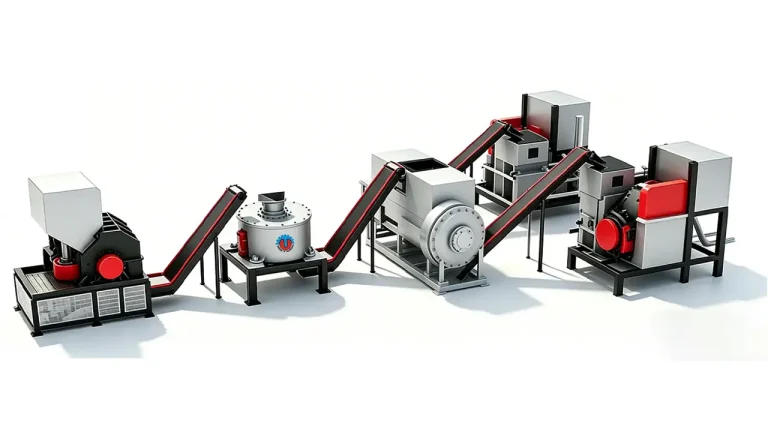
Fully Automatic Metal Briquetting Line

Overview: Optimize Your Scrap Metal Workflow UT Machinery’s fully automatic metal briquetting line is designed for CNC machining centers, metal recyclers, and industrial scrap facilities worldwide. Our integrated system synchronizes chip crushing, centrifugal deoiling, and high-pressure briquette pressing into a seamless production flow, delivering high ROI and operational efficiency. This line converts messy, oily metal chips into furnace-ready briquettes, while recovering valuable cutting fluids and reducing labor and handling costs. The 4-Stage UT Briquetting Process Stage 1: Heavy-Duty Chip Crushing Shears long, curly metal swarf into uniform 10–30 mm fragments. Reinforced alloy knife rollers prevent jams and maintain consistent feed for the press. Integrated tramp metal release protects blades from solid contaminants. Stage 2: High-Speed Centrifugal Deoiling Uses extreme G-force to remove residual oils and coolants. Produces clean, dry chips ready for immediate smelting. Ensures minimal smoke or oil leakage in the workshop. Stage 3: Smart Buffer Silo with Anti-Bridging System Mechanical arch-breaking device prevents bridging or clogging. PLC-monitored feeding guarantees smooth, continuous operation. Supports 24/7 automated production with minimal labor. Stage 4: High-Pressure Hydraulic Briquette Press Cold-presses metal particles into solid briquettes. Density: 6–8 t/m³ (material-dependent). Smelting Yield: Briquettes submerge instantly, reducing oxidation burn-off by up to 15%. Streamlines storage and logistics by compressing metal scrap efficiently. Key Advantages for Industrial Metal Recycling 01 Premium Scrap Value: High-density, dry briquettes fetch higher prices at smelters. 02 Cost Savings: Recover coolant, reduce transport volume, and lower labor requirements. 03 Environmental Compliance: Prevent oil leakage, support ESG and zero-waste initiatives. 04 Industrial Durability: Wear parts made from hardened alloy steel for long service life. Technical Specifications FeatureUT Machinery CapabilityCompatible MaterialsAluminum, Steel, Copper, Brass, Cast Iron, Titanium SwarfThroughput Capacity500 kg/h – 5,000 kg/h (customizable)Briquette DensityUp to 85% of solid metal densityOil Recovery Rate≥95%Control SystemSiemens/Schneider PLC with Multi-language HMI Why UT Machinery is Unique Integrated 4-Stage Process: Crushing, deoiling, buffering, and pressing into one high-efficiency workflow. Customizable Layout & Molds: Tailored to scrap type and production goals. Continuous, Automated Operation: Minimal downtime, optimized cycle times, stable briquette density. Durable Engineering: Critical wear parts made of hardened steel for industrial longevity. Increase ROI on your scrap metal Contact UT Machinery for a full-line consultation and layout plan. FAQ Q1: What types of metals can the UT Machinery Metal briquetting line process?A: Aluminum, steel, copper, brass, cast iron, and titanium swarf, suitable for CNC machining centers and industrial scrap facilities. Q2: What is the throughput capacity of the line?A: The system handles 500 kg/h up to 5,000 kg/h, depending on scrap type and custom configuration. Q3: How much oil can be recovered?A: Over 95% of cutting fluids and coolants are reclaimed during the centrifugal deoiling stage for immediate reuse. Q4: How dense are the briquettes?A: High-pressure hydraulic briquettes achieve 6–8 t/m³ depending on material, ready for smelting. Q5: Can the production line be customized for different scrap types or production goals?A: Yes. Our briquetting lines are fully flexible and tailored to your material type, particle size, and desired throughput. The standard configuration is a baseline — crusher type, deoiling capacity, buffer silo design, press size, and production rate can all be adjusted to meet your operational needs.
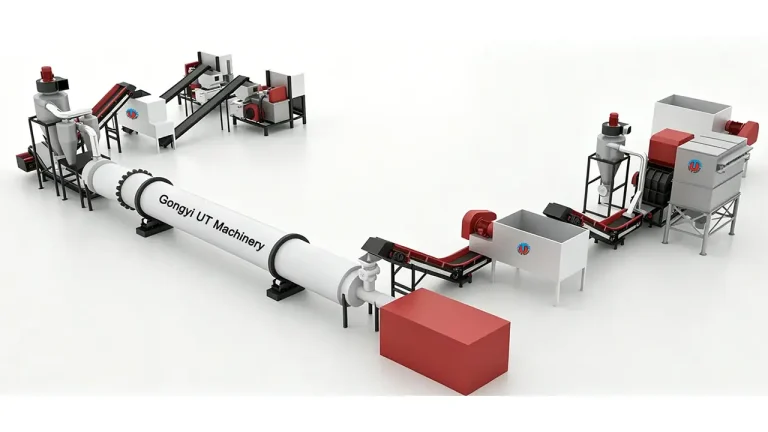
Fully Automated Biomass Briquette Production Line

Overview: Turn Waste into "Green Coal" UT Machinery’s Biomass Briquette Production Line transforms forestry and agricultural residues—such as sawdust, wood chips, rice husks, and stalks—into high-density, solid fuel sticks. Engineered for 24/7 continuous operation, this line produces briquettes with superior density (1.2–1.4 g/cm³), longer burn time, and easier handling. These premium fuel sticks are ideal for industrial boilers, power plants, and luxury fireplaces. Unlike standard briquetting equipment, our integrated biomass briquette press solution ensures consistent moisture control, uniform density, and maximum energy efficiency throughout the production process. Optimized Process Flow (Engineering Edge) Our turnkey line manages moisture, density, and material flow at every stage to deliver reliable, high-density solid briquettes: Briquette Process Flow : Raw Material Bin → Crusher / Pulverizer → Cyclone Dust Collector → Intermediate Storage Bin → Hot Air Furnace → Rotary Dryer → Dust Collector + Storage Bin → Distribution Bin → Briquette Machine 01 Raw Material Handling High-capacity Raw Material Bins with automated feeders maintain a steady supply of biomass, ensuring uninterrupted production for industrial-scale operations. 02 Precision Size Reduction The Crusher/Pulverizer reduces raw material to an optimal 3–5 mm size, essential for uniform, high-density briquetting. 03 Advanced Dust Management An integrated Cyclone Dust Collector removes fine particulates, maintaining a clean and safe workspace compliant with global EHS standards. 04 Buffering System The Intermediate Storage Bin balances material flow between crushing and drying, eliminating bottlenecks and ensuring continuous throughput. 05 Smart Thermal Control The Hot Air Furnace preheats the biomass for the Rotary Dryer, lowering moisture content to the ideal 8–12% "Golden Ratio" for solid briquette formation. 06 Intelligent Distribution The proprietary Distribution Bin evenly feeds dried biomass to multiple briquette machines, enabling scalable production while preserving material consistency. 07 High-Pressure Forming Using Lignin-Plasticization Technology, the briquette machines produce 100% solid round or square fuel sticks without chemical binders. High pressure and temperatures above 300°C activate natural lignin as a binder. Technical Specifications FeatureIndustrial SpecificationProduction Capacity 500 kg/h – 10 t/h (Fully Customizable)Briquette Structure100% Solid (No inner hole)Briquette ShapeSolid Cylindrical (Round) or Solid Quadrangular (Square)Final Density1.2 – 1.4 g/cm³Screw Service Life≥ 800 hours (Proprietary Wear-Resistant Alloy)Moisture Range8% – 12% (Optimized for forming)Automation LevelFully Automatic (PLC Smart Control Optional) Why Choose UT Machinery’s Production Line? 01 Modular Scalability Start with two briquette machines and expand to six or more using the same drying system. The Distribution Bin allows growth while lowering initial CAPEX. 02 Proprietary Alloy Technology Our core screws use a proprietary wear-resistant coating, lasting 3x longer than standard parts, reducing downtime and maintenance costs. 03 Solid Briquette Advantage Solid briquettes have a higher energy-per-volume ratio than hollow ones. They are easier to transport, stronger, and preferred for industrial power plants due to consistent burn rate. 04 Energy-Efficient Drying The Rotary Dryer uses heat-recycling logic, reducing fuel consumption by up to 15% compared to traditional systems. 05 Global Compliance Dual-stage dust collection ensures compliance with international environmental and safety standards, simplifying inspections and approvals. Take the Next Step Ready to launch your biomass energy project? UT Machinery provides custom CAD factory layouts and detailed ROI analysis tailored to your local biomass costs. Get a Free Quote Now Download Technical Catalog Frequently Asked Questions Q: Is the ROI high for a biomass briquette line?A: Yes. Most clients achieve a full ROI within 8–14 months. High-density solid briquettes sell at a premium in the global green energy market, outperforming loose biomass or hollow briquettes. Q: Can I process different materials like rice husks, coconut shells, or straw?A: Absolutely. Our system supports various biomass types. Frequency-conversion feeders allow adjustment for material density, moisture, and hardness. Q: Do biomass briquettes require chemical binders?A: No. Natural lignin in the biomass acts as a binder under high pressure and temperatures above 300°C, producing rock-solid, high-density briquettes. Q: Are the briquettes solid or hollow?A: All briquettes are 100% solid, available in round or square shapes, with no inner hole, ensuring superior strength and consistent burn. Q: Can this line support industrial-scale production?A: Yes. The modular, fully automated line is suitable for workshops, industrial plants, and biomass energy projects requiring high throughput.
Contact

GET AN EXPERT QUOTE

Share your raw material and capacity requirements — our engineering team will provide a tailored briquetting solution within 24 hours.