
UT Machinery recently completed an agricultural waste briquetting project by delivering a biomass briquette press machine to a customer in India. The project is designed to convert locally available agricultural residues into biomass fuel briquettes for industrial applications.
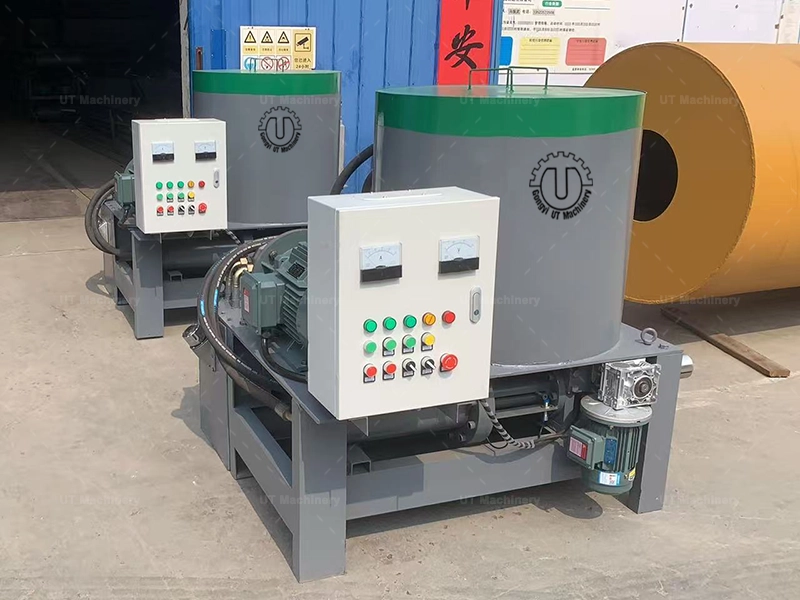
Before shipment, the machine was assembled, commissioned, and tested in our workshop. Engineers inspected the hydraulic system, feeding mechanism, electrical control system, and briquette forming performance to verify stable operation before delivery.
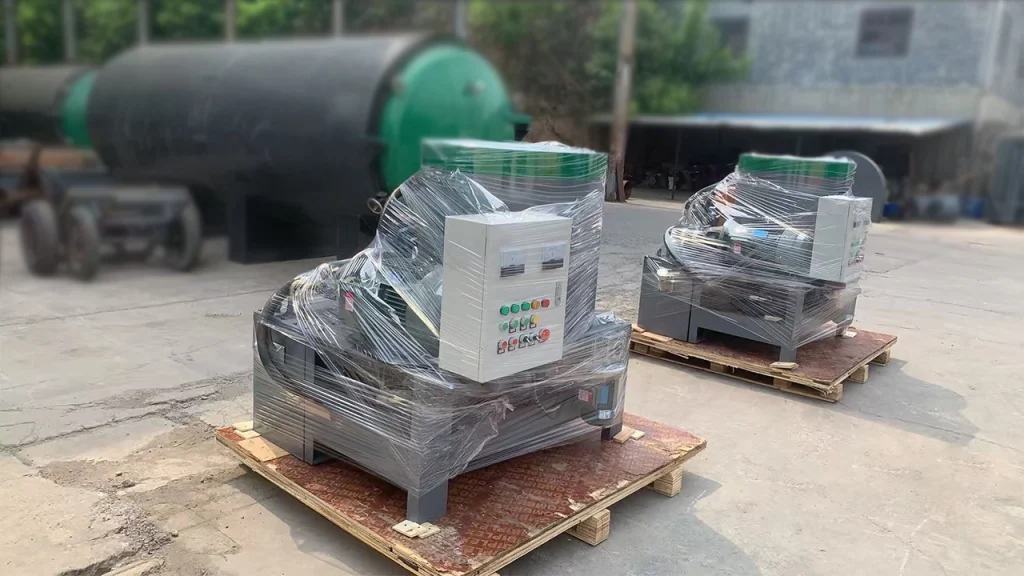
After the trial operation was completed, the equipment was securely packed and prepared for transportation to the customer’s factory in India.
Project Overview
| Item | Details |
|---|---|
| Project Location | India |
| Equipment | Biomass Briquette Press Machine |
| Application | Agricultural waste briquetting |
| Raw Materials | Rice husk, sawdust, straw, sugarcane bagasse and other biomass residues |
| Final Product | Biomass fuel briquettes |
This agricultural waste briquetting project in India is designed to improve the utilization of locally available biomass materials by converting loose agricultural residues into a more manageable solid fuel.
Customer Project Background
The customer operates a biomass processing business in India, where agricultural residues are available throughout the year. The project aims to convert these locally available materials into biomass fuel briquettes for industrial use.
During the initial project discussion, the customer focused on equipment stability, raw material adaptability, and continuous operation rather than simply increasing production capacity. Based on these requirements, UT Machinery recommended a hydraulic biomass briquette press machine suitable for the planned production conditions.
Processing Agricultural Waste into Biomass Fuel Briquettes
India produces large quantities of agricultural residues every year. Materials such as rice husk, wheat straw, sugarcane bagasse, sawdust, and groundnut shells are widely available but generally have low bulk density, making storage, transportation, and direct utilization less efficient.
In this project, these biomass materials will be compressed into biomass fuel briquettes through the briquetting process. Compared with loose biomass, briquettes are easier to handle, transport, and store, making them suitable for industrial fuel applications.
The supplied biomass briquette press machine can process different biomass materials depending on moisture content, particle size, and material preparation conditions.
Check out our agricultural waste briquetting solutions to learn how different biomass residues can be converted into dense fuel briquettes.
Equipment Selection for the Project
Agricultural residues differ in moisture content, fiber structure, and particle size depending on the material source and storage conditions. These characteristics influence briquette quality and production stability.
For this project, the equipment configuration was selected according to the customer’s raw materials and expected production requirements. The hydraulic briquetting system provides stable compression for agricultural residues after proper material preparation.
Supplied Biomass Briquette Press Machine Configuration
The equipment delivered for this project is configured for agricultural waste briquette production.
| Parameter | Specification |
|---|---|
| Machine Type | Hydraulic Biomass Briquette Press |
| Capacity | 200–300 kg/h |
| Briquette Diameter | 60 mm |
| Motor Power | 7.5 kW |
| Application | Biomass fuel briquette production |
| Suitable Materials | Rice husk, sawdust, straw, agricultural residues |
Actual production capacity depends on raw material characteristics and operating conditions.
Factory Testing Before Shipment
Before delivery, UT Machinery completed a full inspection and trial operation to verify the machine condition.
The inspection included:
- Hydraulic system operation
- Feeding system inspection
- Compression and briquette forming test
- Electrical control system verification
- Continuous running test
During the trial operation, engineers observed feeding consistency, briquette density, forming stability, and continuous machine operation. The testing process verified that the equipment functioned normally before shipment and was ready for installation at the customer’s production site.
Completing factory testing before shipment helps reduce commissioning risks after the equipment arrives at the customer’s production site.
Shipment to India
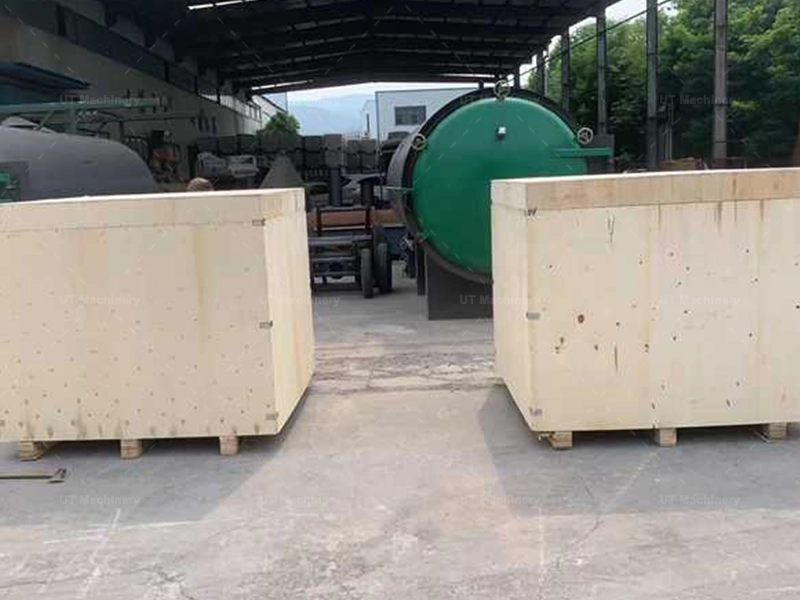
After factory testing was completed, the machine was dismantled where necessary, securely packed, and prepared for international transportation.
Protective packaging was applied to key hydraulic and electrical components to reduce the risk of damage during shipment to the customer’s factory in India.
Application of Biomass Briquettes in India
The biomass briquettes produced by this project can be used as solid fuel in a variety of industrial applications, including:
- Industrial boilers
- Brick manufacturing plants
- Textile mills
- Food processing facilities
- Biomass fuel suppliers
Converting agricultural residues into biomass briquettes provides an effective way to utilize biomass resources while producing a standardized solid fuel for industrial use.
Expected Project Outcome
After installation and commissioning, the biomass briquette press machine will be used to convert agricultural residues into biomass fuel briquettes for industrial applications.
The project is expected to improve the utilization of locally available biomass resources while providing a stable briquetting process based on the customer’s raw material conditions.
Related Biomass Briquetting Equipment
In addition to biomass briquette press machines, UT Machinery also supplies supporting equipment for biomass briquetting projects, including crushing, drying, feeding, and complete briquetting production line solutions.
Equipment configuration can be adjusted according to raw material characteristics, required production capacity, and briquette specifications.
FAQ
What materials can this biomass briquette press machine process?
The machine can process rice husk, sawdust, straw, sugarcane bagasse, groundnut shells, and other biomass residues depending on moisture content and material preparation conditions.
What is the capacity of this biomass briquette press machine?
The hydraulic biomass briquette press supplied for this type of project is designed for a production capacity of approximately 200–300 kg/h. Actual output depends on the properties of the raw materials and operating conditions.
Why is briquetting suitable for agricultural waste?
Briquetting compresses loose agricultural residues into dense biomass fuel briquettes, making them easier to transport, store, and use as industrial fuel.
Why is raw material preparation important before briquetting?
Proper moisture content and suitable particle size help improve briquette forming stability and reduce fluctuations during continuous production. Material preparation requirements vary depending on the biomass material being processed.