Hydraulic Agricultural Waste Briquetting Solution | Rice Husk, Straw & Coconut Shell
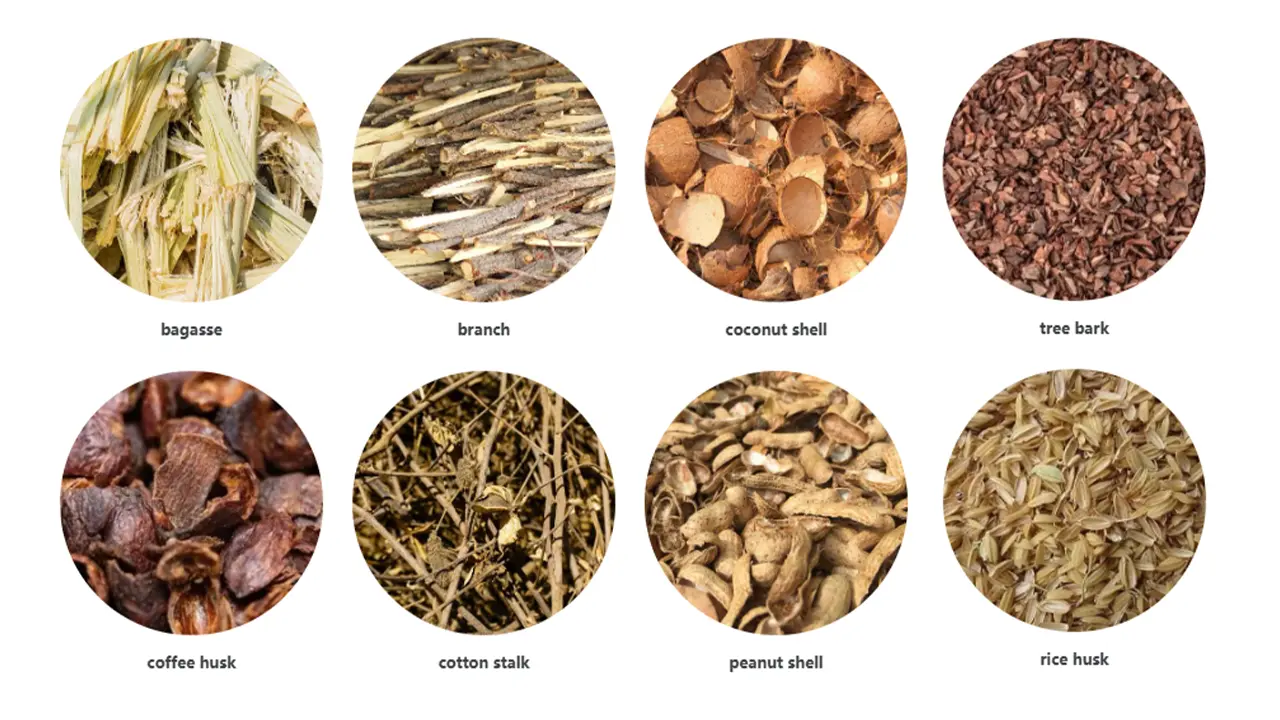
UT Machinery’s Hydraulic Agricultural Waste Briquetting Solution converts rice husk, straw, sugarcane bagasse, and coconut shell into high-density fuel briquettes. Featuring crushing, drying, controlled feeding, and high-pressure hydraulic pressing, this turnkey system ensures uniform briquette density, stable industrial output, and wear-resistant operation, ideal for boilers, heating systems, and biomass energy recovery projects.
High-Pressure Hydraulic Briquetting for Agricultural Residues
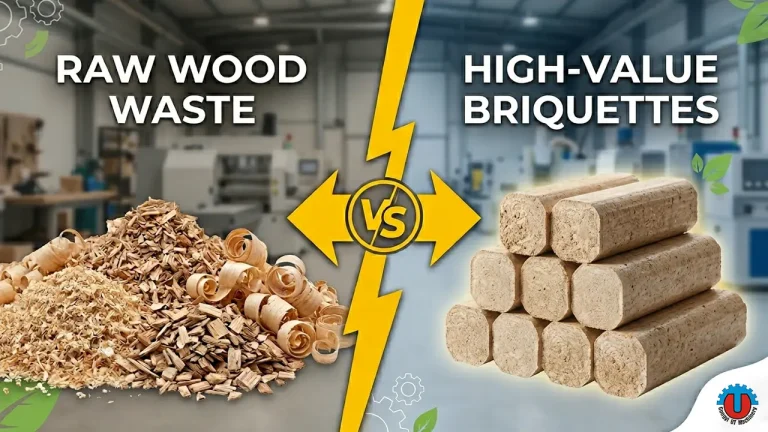
Agricultural residues such as rice husk, sugarcane bagasse, coconut shells, and corn stalks are often burned or discarded, creating waste management and environmental challenges. Our Hydraulic Agricultural Waste Briquetting Solution converts these residues into high-density fuel briquettes using high-pressure hydraulic compression, ideal for industrial boilers, heating systems, and biomass energy recovery projects.
Designed for India, Southeast Asia, and Africa, this solution is optimized for high-fiber, high-hardness agricultural residues with wear-resistant components and stable hydraulic pressure control.
Hydraulic Briquetting Process Workflow
1. Crushing System – Uniform Particle Size
Equipment: Industrial Hammer Mill / Crusher
Function:
- Reduces rice husk, straw, and coconut shells to 3–5 mm
- Ensures stable densification during hydraulic pressing
2. Drying System – Moisture Control
Equipment: Rotary Drum Dryer + High-Efficiency Burner
Process:
- Reduces moisture content to 8–12%
- Ensures optimal hydraulic compression and high-density briquette formation
3. Feeding System – Stable Material Delivery
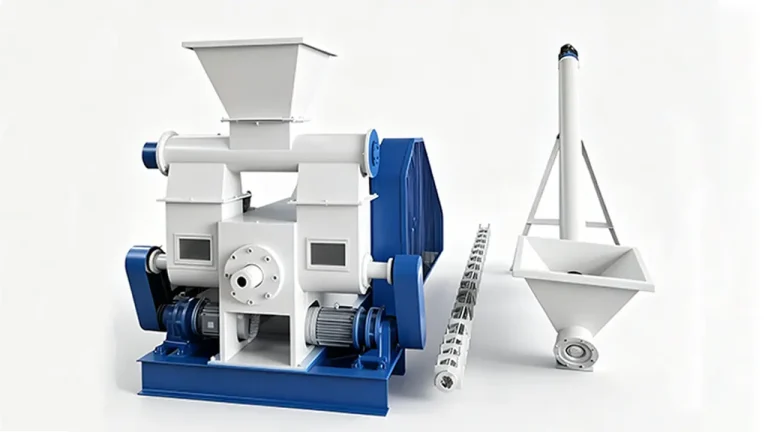
Equipment: Hydraulic / Screw Feeding System
Advantage:
- Provides controlled, uniform feed into the hydraulic press
- Prevents clogging and maintains stable production
4. Hydraulic High-Pressure Pressing
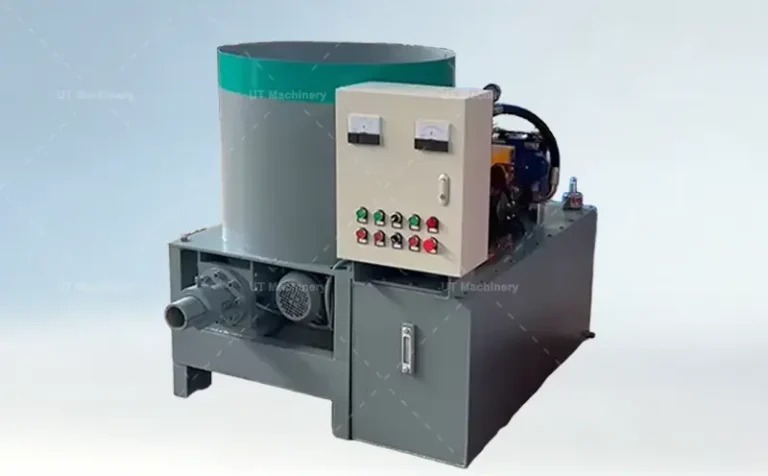
Equipment: Hydraulic Briquetting Press
Principle:
- High-pressure hydraulic system compresses biomass into dense briquettes
- Fibers are rearranged under pressure to form stable blocks
- No high-temperature friction required
Output:
- Hexagonal, cylindrical, or quadrangular briquettes
- High-density, uniform, and suitable for industrial fuel applications
Technical Advantages
- High Hydraulic Pressure: Consistent compression for uniform briquette density
- Wear-Resistant Design: Handles high-fiber and high-hardness materials
- Continuous Industrial Operation: Stable 24/7 production
- Low Maintenance: Hydraulic system reduces wear compared to mechanical screw systems
- Dust-Control System: Cyclone dust collector ensures safe and clean operation
Applications
- Industrial Boilers: Energy-efficient fuel alternative for rice mills, sugar factories, and biomass plants
- Heating Systems: Clean-burning briquettes for residential and commercial heating
- Energy Recovery: Converts agricultural residues into high-value fuel
Why Choose UT Machinery?
- Global Experience: Installed in India, Southeast Asia, and Africa
- Customized Plant Layout: CAD-based hydraulic press line designed for your factory and capacity
- Engineering Support: Optimized for high-hardness biomass such as rice husk, sugarcane bagasse, and coconut shell
- Sustainable & Eco-Friendly: Reduces waste burning and carbon emissions while generating value
Start Your Agricultural Waste Hydraulic Briquetting Project Today
Contact UT Machinery for a customized CAD layout and detailed quotation.
FAQ
Q1: Can the system handle high-fiber residues?
A1: Yes, the hydraulic system is optimized for high-fiber, high-hardness agricultural residues.
Q2: What is the ideal moisture content?
A2: 8–12% moisture ensures optimal hydraulic compression.
Q3: Can it run continuously?
A3: Yes, the system supports 24/7 industrial production.
Q4: What shapes and densities are possible?
A4: Hexagonal, cylindrical, or quadrangular shapes; density depends on material and hydraulic pressure settings.