Biomass Briquette Press
Mechanical Stamping Briquette Press
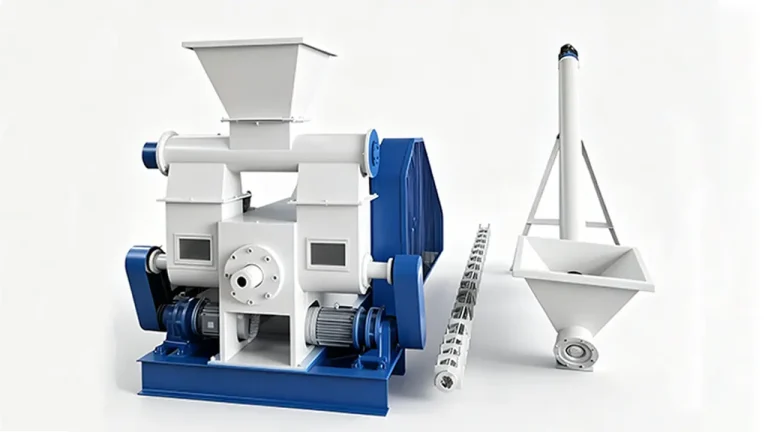
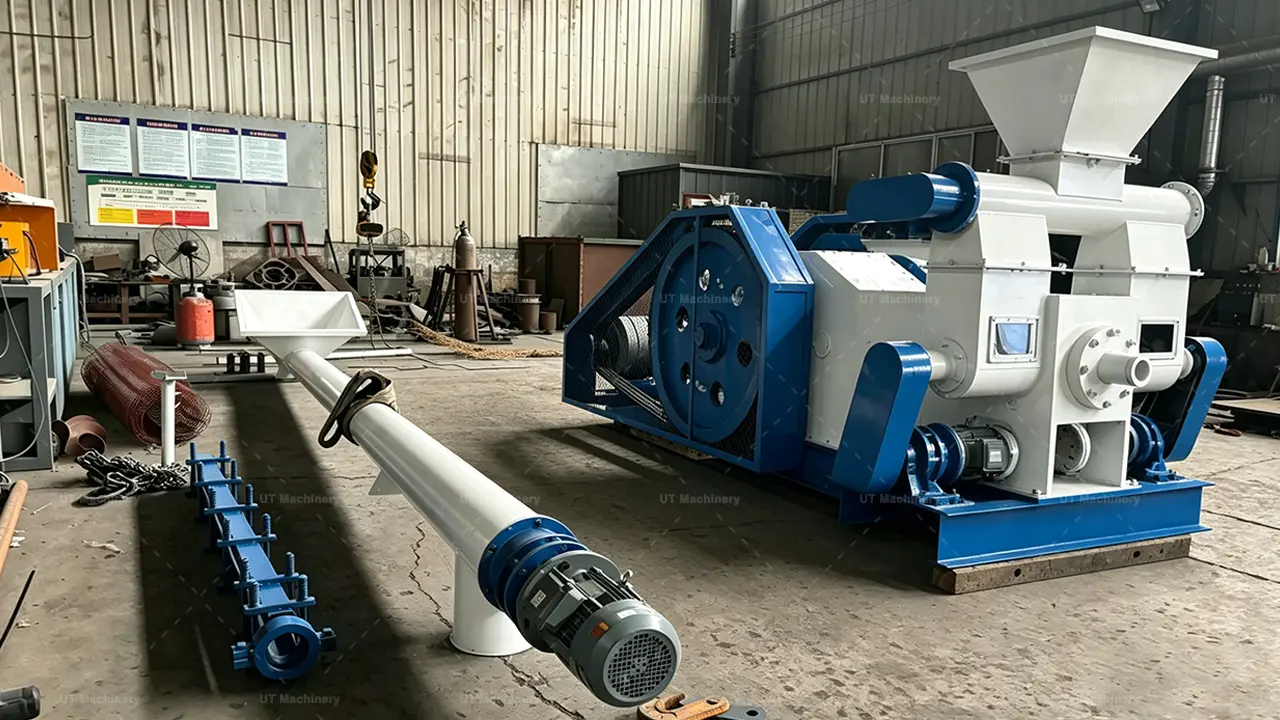
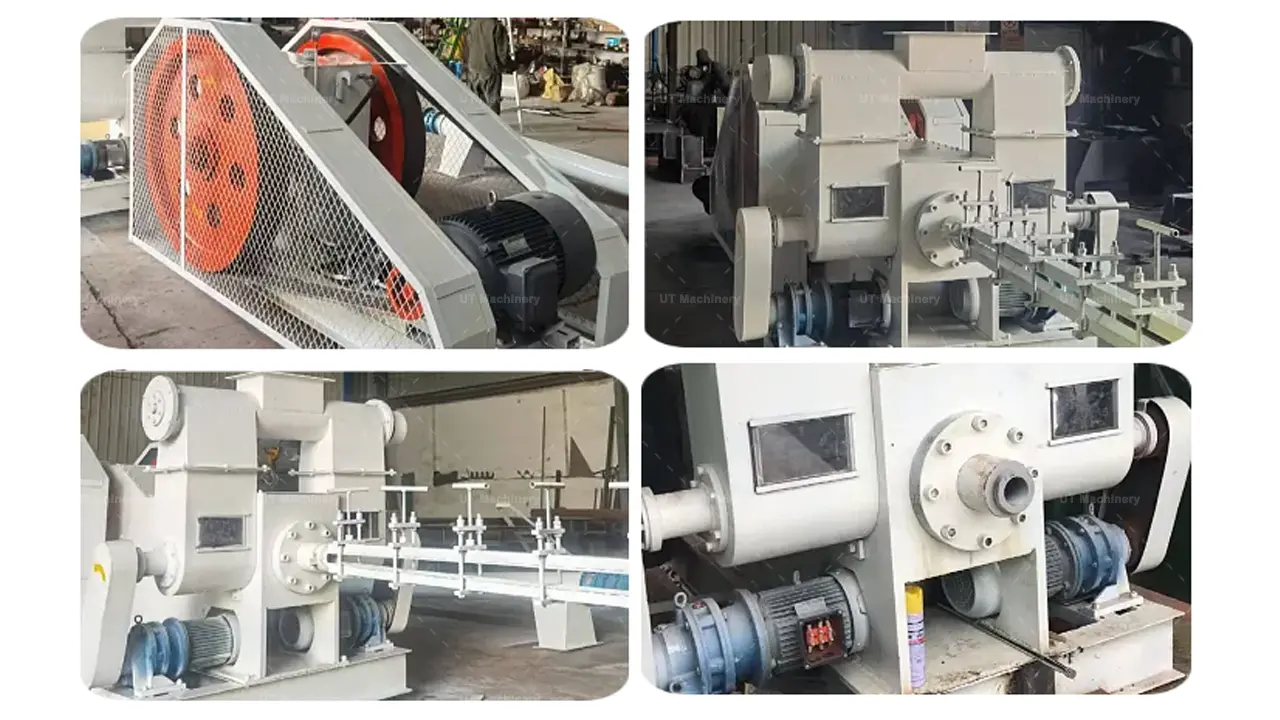
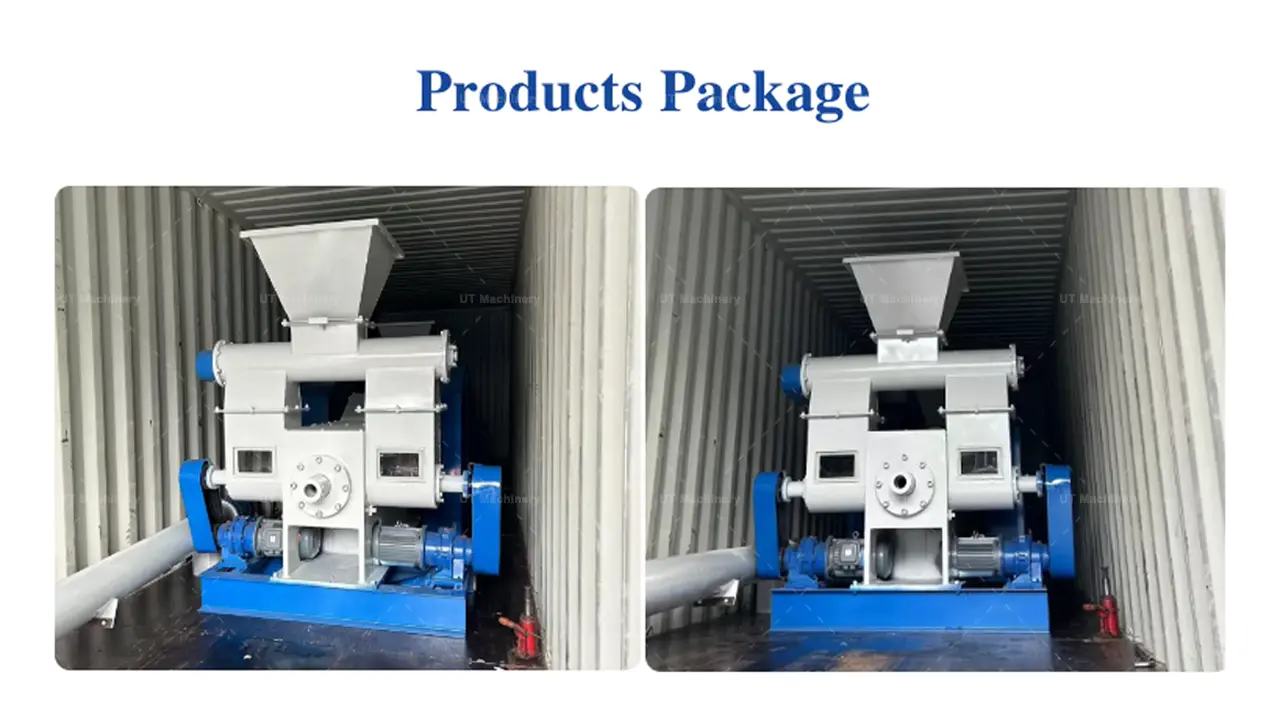
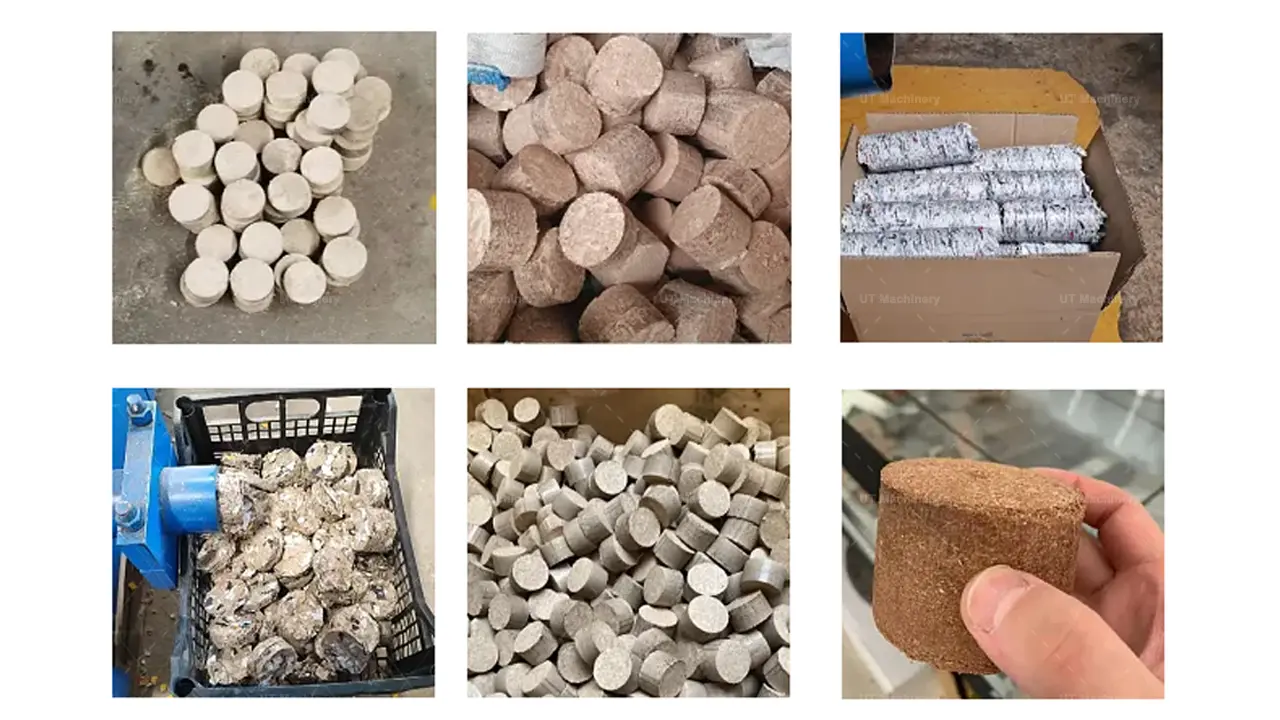
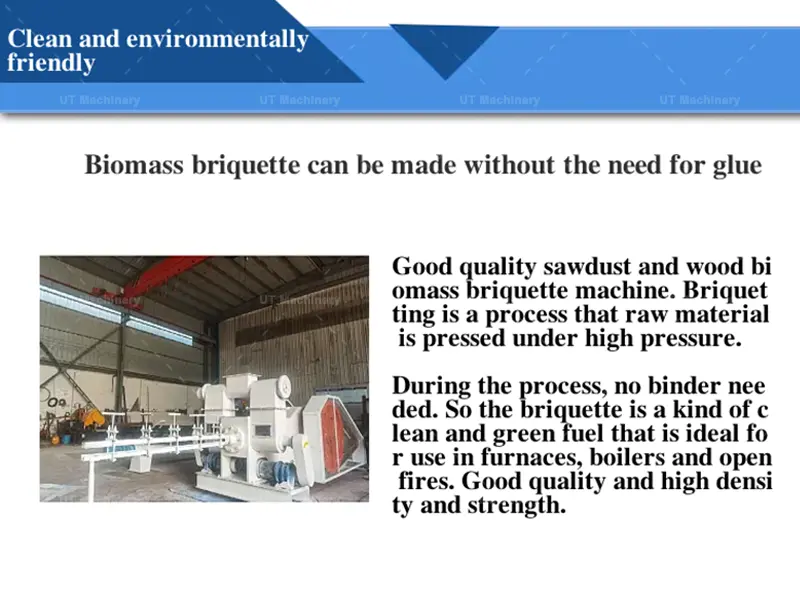
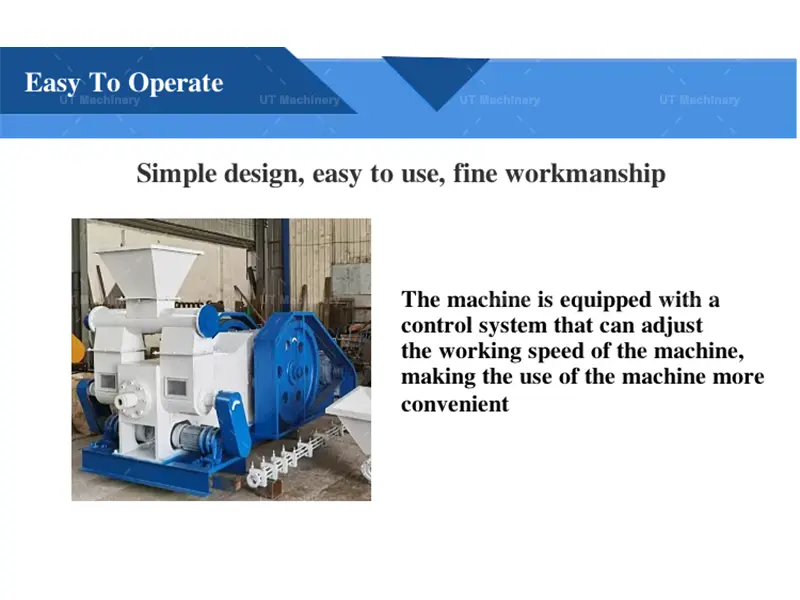
The Mechanical Stamping Briquette Machine by UT Machinery is a high-efficiency solution for industrial biomass fuel production. Designed for 24/7 operation, it converts wood, agro, and industrial waste into high-density, eco-friendly briquettes.
Key Highlights:
- High Production Capacity: 1.0 – 1.5 TPH with customizable output diameter (8–70mm)
- Durable & Low Maintenance: Premium wear-resistant stamping pins and dies with 3x longer maintenance intervals than screw-type machines
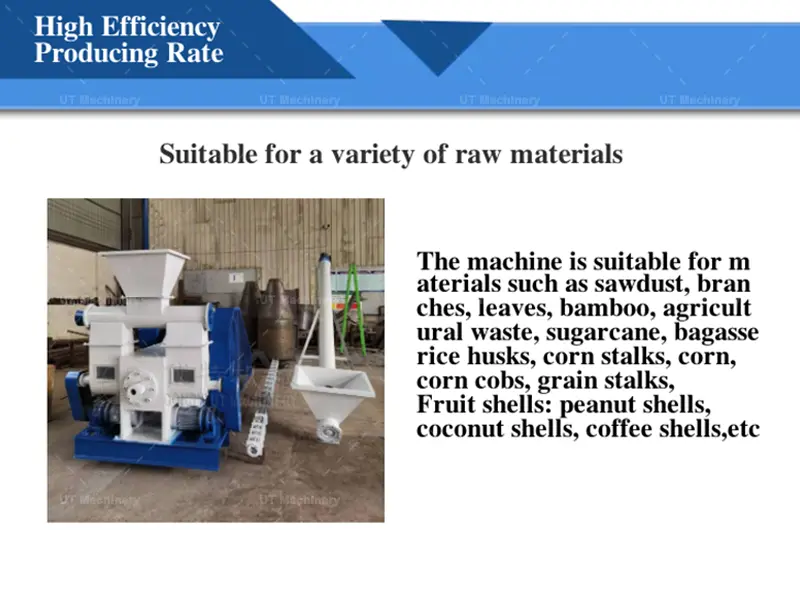
- Versatile Applications: Handles wood waste, agro-residues, and industrial by-products for pellets or fuel logs
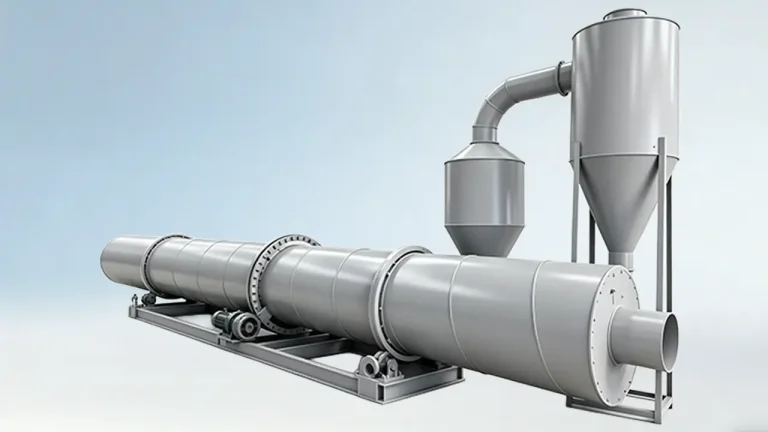
- Turnkey Solutions Available: Integrated production line including Crusher, Rotary Drum Dryer, Conveyor, and Briquette Press for optimized workflow
Biomass Briquetting Solution for Large-Scale Fuel Production
Looking to scale your biomass fuel production? Our Mechanical Stamping Briquette Machine is the industrial solution for high-capacity waste recycling. Unlike small-scale screw extruders, this heavy-duty piston press operates 24/7, converting agricultural and forestry waste into high-density “green coal.”
💡 Pro Tip: For raw materials with moisture >20%, our Rotary Drum Dryer is recommended before briquetting to ensure optimal bonding and high caloric value.
Technical Specifications of The Mechanical Stamping Briquetting Press
| Parameter | Specification | Notes |
|---|---|---|
| Production Capacity | 1.0 – 1.5 Tons per Hour (TPH) | Flexible range for different raw materials |
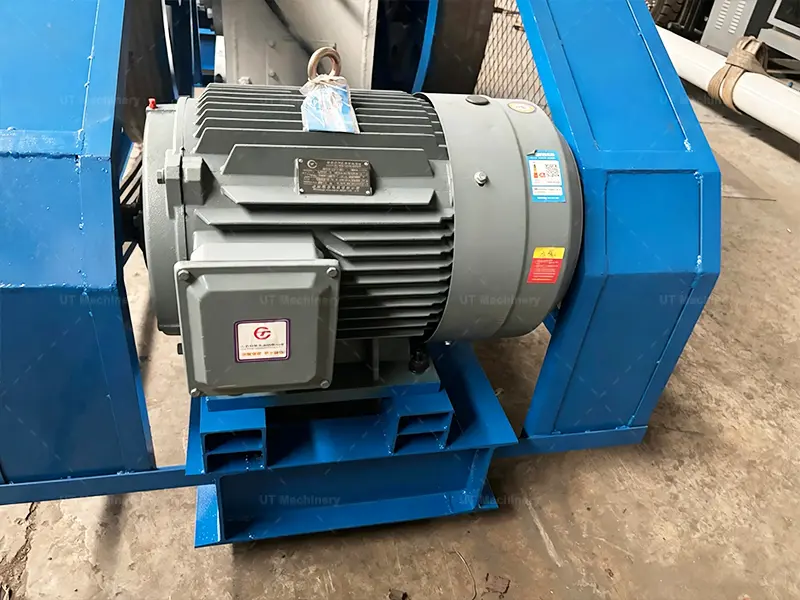
| Main Driving Power | 55kW – 75kW | High-torque motor for continuous operation |
| Operating Speed | 300 – 350 RPM | Optimized for long-term mechanical durability |
| Output Diameter | 8mm – 70mm | Customizable molds for briquettes or pellets fuel |
| Machine Weight | Approx. 3,500kg | Heavy-duty steel frame for maximum stability |
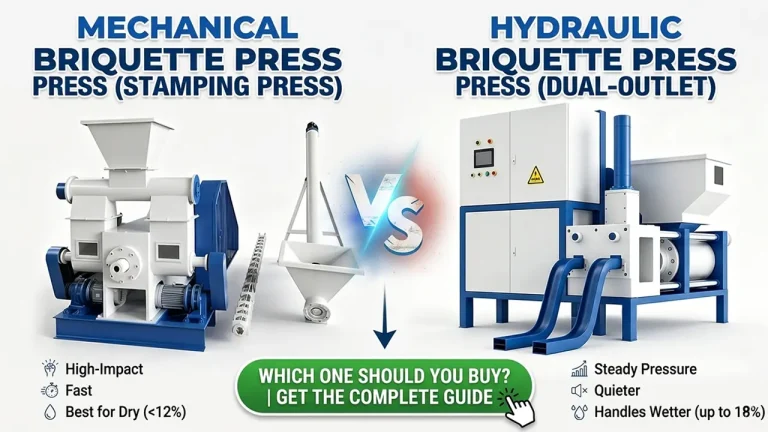
Mechanical vs. Hydraulic: Which Should You Choose?
Selecting the right technology is crucial for your ROI. Mechanical Stamping is the “King of Speed,” best for large-scale industrial fuel plants needing high volume at low cost.
Hydraulic Presses are ideal for specialized high-density requirements or specific geometric shapes.
- Need high-volume industrial output? Stick with the Mechanical Stamping model.
- Need precision shapes? Check our Mechanical vs Hydraulic Briquette Machine Comparison Guide for a detailed 7-point breakdown.
Why Professional Plants Prefer Mechanical Stamping
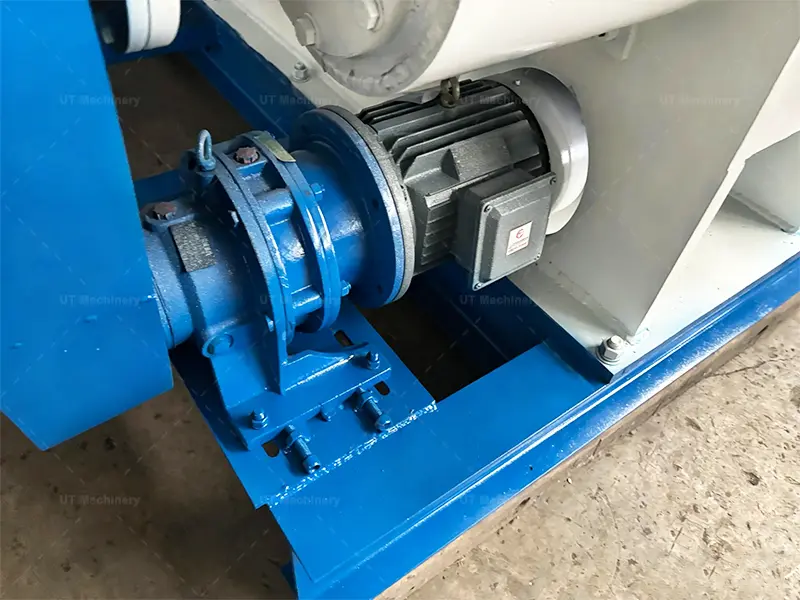
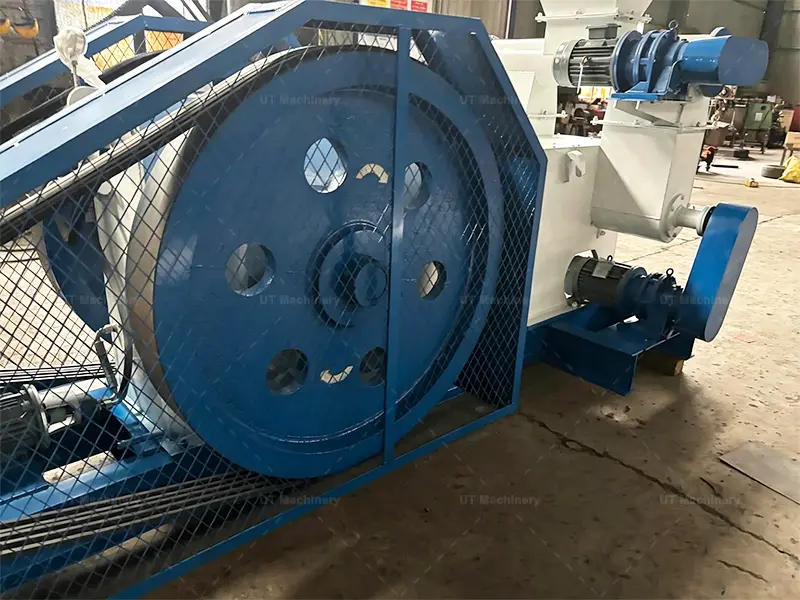
Reliable Design for Global Export
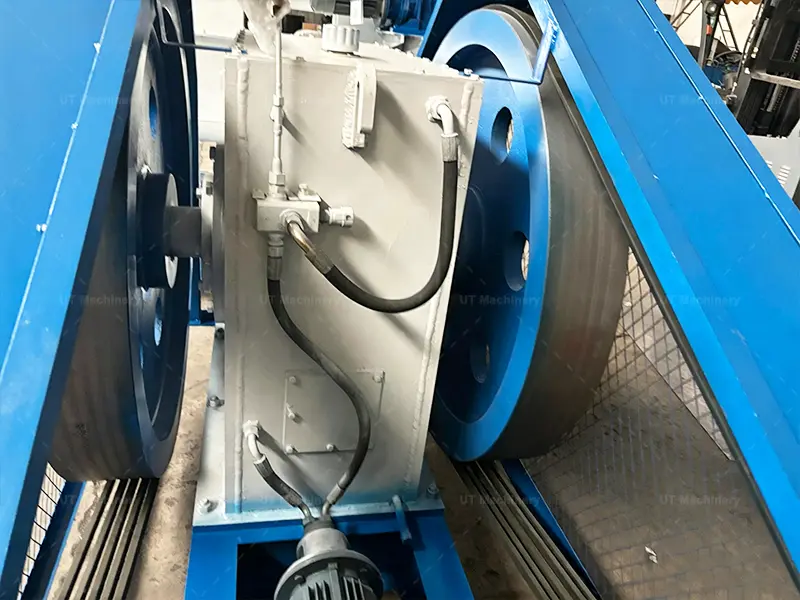
- Vibration Control: The 3.5-ton reinforced frame minimizes mechanical fatigue and noise during high-speed punching.
- Precision Feeding: Automated Screw Conveyor ensures consistent material flow and prevents hopper blockages.
- Global Compatibility: Motors and electrical components are customizable to your local voltage (380V/415V/440V).
Common Applications & Raw Materials
- Wood Waste: Sawdust, wood shavings, furniture factory offcuts
- Agro-Waste: Straw, rice husk, sunflower shells, corn stalks
- Industrial Waste: Paper pulp, RDF (Refuse Derived Fuel), and carbon powder
Complete Biomass Production Line
UT Machinery provides more than just a Mechanical Stamping Briquette Machine — we offer a complete turnkey biomass production line to transform raw waste into high-density, eco-friendly briquettes.
Integrated Process:
- Size Reduction: [Hammer Mill / Crusher] to process wood chips or stalks
- Moisture Control: [Rotary Drum Dryer] for optimal 10-18% moisture
- Automated Conveying: Consistent feeding to ensure the press operates at peak TPH
- Briquette Pressing: High-pressure stamping for maximum density
Whether you’re handling wood waste, agro-residues, or industrial by-products, our integrated production line ensures continuous, high-volume operation and reliable output.
Ready to Optimize Your Production?
Don’t just buy a machine — get a professional engineering solution. Contact us today for:
- Factory-Direct Pricing (No middlemen fees)
- Customized CAD Site Layouts
- Free Testing Video using your specific raw materials
FAQ
Q: What is the moisture requirement for raw materials?
A: For best results, moisture should be 10%-18%. If the material is too wet, the briquettes will not bond; if too dry, they may crack.
Q: Can this machine produce hexagonal briquettes?
A: Yes! We provide customized molds for round, hexagonal, and square shapes to meet your local market demands.