What Is Coco Peat? A Complete Guide to Properties, Preparation, and Briquetting
Learn what coco peat is, including its properties, preparation requirements, and why briquetting is essential for export. This guide explains how loose coco peat is processed into high-density blocks for agricultural substrate applications.
Introduction
If you are exploring agricultural substrates, hydroponics, or biomass processing, you have likely encountered coco peat, also known as coir pith or coir dust.
Coir pith is a natural material obtained from coconut husk processing. During coconut fiber extraction, the fine particles separated from the husk are collected, processed, and used as a growing medium for horticulture, hydroponics, and substrate production.
Due to its high water-holding capacity, good aeration, and renewable source, coco peat has become an alternative to traditional peat moss in many commercial cultivation applications.
However, raw coco peat is loose, bulky, and difficult to transport economically. For commercial producers, proper drying, preparation, and compression are essential steps to convert loose coco peat into standardized blocks for storage, export, and distribution.
What Is Coco Peat? Definition and Basic Properties
Coco peat is the fine fibrous material separated from coconut husk during the extraction of coconut fiber. Traditionally discarded as waste during fiber extraction, processors discovered that this fine pith possesses remarkable agronomic properties:
- Water Retention: It can absorb up to 8 to 9 times its dry weight in water, releasing it gradually to plant roots.
- Aeration & Drainage: Unlike soil, cocopeat maintains adequate air-filled porosity even when fully saturated, preventing root rot.
- pH Stability: Naturally ranging between 5.5 and 6.8, it provides an optimal chemical baseline for most crops.
How Is Coco Peat Produced from Coconut Husk?
Cocopeat is generated as a byproduct during coconut fiber processing.
The typical production process includes:
Coconut Husk Collection
Fresh coconut husks are collected from coconut processing facilities.
Fiber Extraction
Mechanical defibering equipment separates long coconut fibers from the husk material.
Coco Peat Separation
The remaining fine particles and pith are collected as coco peat.
Screening and Cleaning
The material is screened to remove unwanted fiber pieces and impurities.
Drying and Processing
After moisture adjustment, coco peat can be packaged directly or compressed into blocks for export.
Why Is Coco Peat Briquetting Essential for Export?
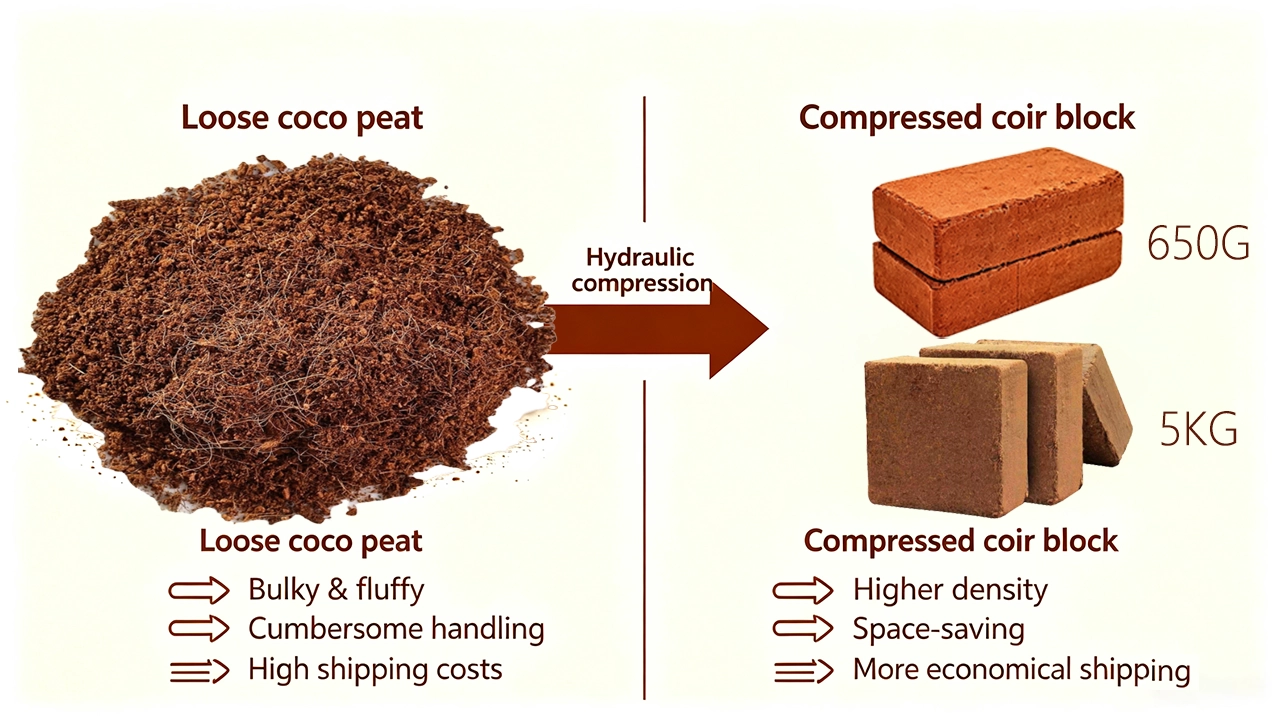
Freshly processed coir pith has an extremely low bulk density in its loose form. Shipping loose material means paying mostly for empty air space inside shipping containers, driving logistics costs to unsustainable levels.
By utilizing industrial hydraulic equipment to compress loose coco peat into high-density blocks, bricks, or tablets, manufacturers achieve significant volume reduction—often significantly reducing transportation volume and improving container utilization. When the end user receives the product, adding water easily restores the block to its original loose, fibrous structure.
Engineering Insight: Industrial briquetting transforms low-value loose coco peat into a high-density, export-ready commodity that meets strict international trade volume standards.
Raw Material Requirements Before Coco Peat Briquetting
Achieving a stable, uniform, and durable block requires strict control over raw material parameters prior to entering the pressing stage:
| Parameter | Recommended Condition |
|---|---|
| Moisture Content | Usually adjusted according to block requirements and machine design |
| Particle Size | Fine pith with controlled fiber content |
| Impurities | Free from stones and foreign materials |
| Material Consistency | Uniform feeding characteristics |
Overview of the Coir Pith Production Line
Turning raw coconut husks into export-ready blocks involves a streamlined industrial workflow:
Coconut Husk → Fiber Extraction → CocoPeat Separation → Screening & Cleaning → Drying → Moisture Control → Material Storage → Hydraulic Briquetting → Compressed CocoPeat Blocks
- Crushing & Defibering: Extracting the pith from raw husks.
- Sieving & Drying: Screening out oversize elements and reducing moisture to the target 15-20% window.
- Hydraulic Compression: Feeding prepared material into heavy-duty presses to form compact, uniform blocks under high pressure.
Different Forms of Coco Peat Products
Loose CocoPeat
Loose cocopeat is the untreated material collected after coconut fiber processing. It requires further preparation before export or compression.
Coco Peat Blocks
Compressed coco peat blocks reduce storage space and transportation volume, making them widely used for international horticultural supply chains.
Washed and Buffered Coco Peat
For higher-grade horticultural applications, coir pith may undergo washing and buffering processes to improve growing performance.
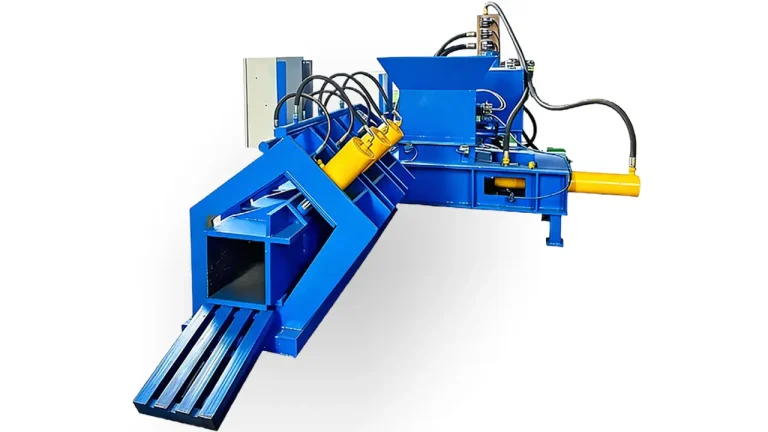
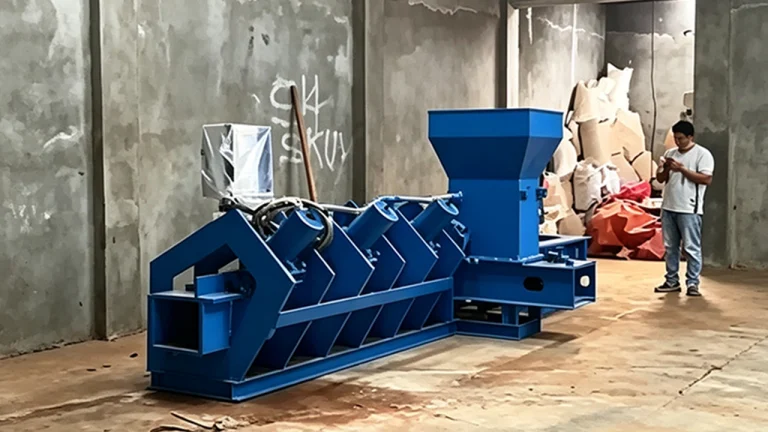
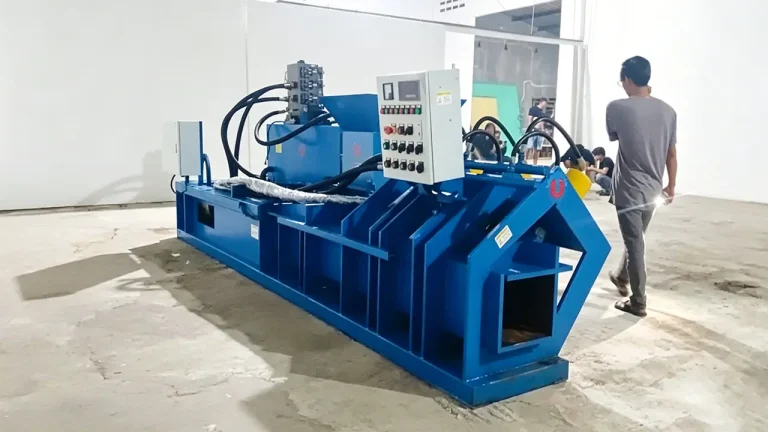
Looking to optimize your compression line? Discover how our heavy-duty industrial machinery handles this final stage efficiently. Learn more about our Coco Peat Briquetting Machine and its technical working process.
Conclusion
Cocopeat is a valuable byproduct of coconut processing with applications in horticulture, hydroponics, and substrate manufacturing.
For commercial producers, the main challenge is not only producing coco peat but also preparing and compressing it into a consistent format suitable for storage, transportation, and export.
By controlling moisture(for detailed moisture thresholds, read our guide on Coco Peat Moisture Control Before Briquetting), particle size, and compression conditions, manufacturers can improve block quality and establish a more efficient cocopeat processing operation.