
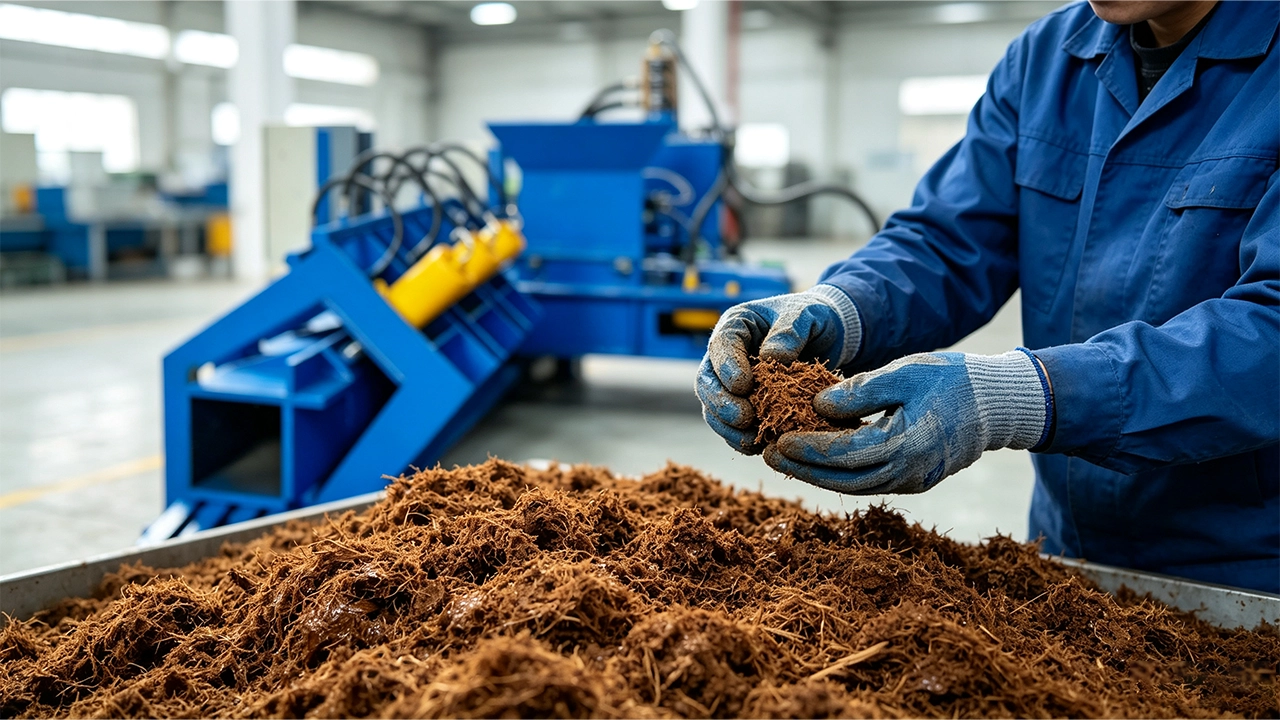
Coco Peat Moisture Control Before Briquetting: Complete Production Guide
The optimal coco peat moisture range for briquetting is 15%–20%. Proper moisture balance ensures stable block density, consistent expansion ratio, crack-free surfaces, and long storage life. Moisture levels below 10% cause cracking and brittle blocks, while moisture above 25% leads to low density, deformation, and mold risks. This guide covers testing methods, adjustment workflows, common defects, and machine-matched moisture standards for commercial coco peat block production.
1. Why Moisture Control Is Critical in Coco Peat Briquetting
Before compressing coco peat into export blocks, moisture content must be properly controlled. Incorrect moisture levels can affect block density, expansion performance, and overall production stability.
Moisture plays an important role in coco peat briquetting because it influences material flow, compression behavior, and the bonding between particles during forming. Even when using a coco peat briquette machine with stable hydraulic pressure, unsuitable moisture conditions can result in loose blocks, cracks, inconsistent density, and unstable production.
Maintaining the correct moisture content helps improve coco peat block production in three key areas:
- Stable Block Density & Hardness: Proper moisture activates natural lignin and resin in coir fibers. Fibers interlock tightly under hydraulic pressure, producing solid, durable blocks that do not crumble during packing, shipping, or palletizing.
- Consistent Rehydration & Expansion: International buyers rank coco peat quality by expansion uniformity. Balanced moisture preserves the peat’s internal cellular structure, ensuring predictable expansion volume after watering — a key export standard for 5kg, 10kg, and custom coco peat blocks.
- Machine Protection & Stable Output: Over-wet material causes feeding slippage, chamber clogging, and motor overload. Over-dry material creates excessive dust and uneven compression. Accurate moisture control keeps your production line running continuously with minimal downtime.
2. Standard Moisture Range for Coco Peat Briquetting (Industrial Standard)
Moisture requirements vary slightly based on fiber length, particle size, ambient humidity, and compression pressure. However, factory-proven moisture thresholds apply to most commercial production lines.
| Moisture Condition | Moisture Percentage | Production & Quality Impact |
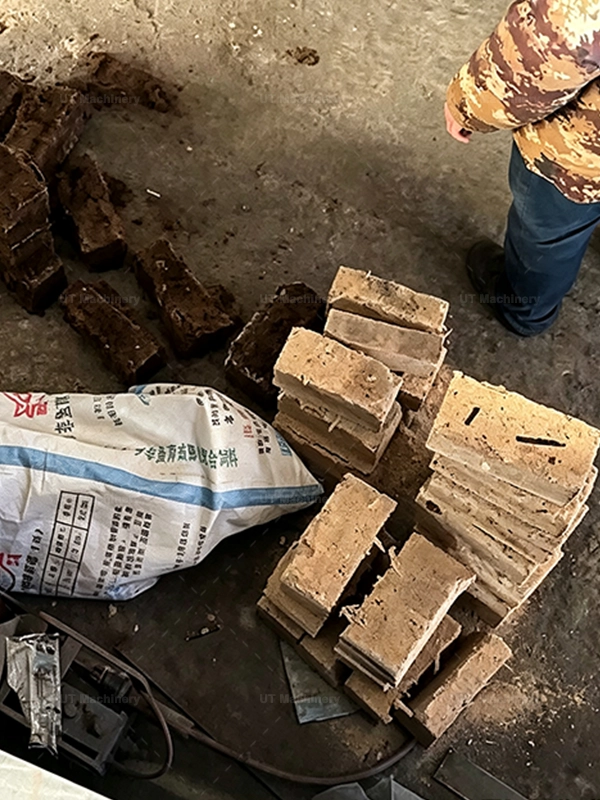
| Too Dry | Below 10% | Poor fiber bonding, severe surface cracks, heavy dust output, brittle blocks, easy breakage during transportation. |
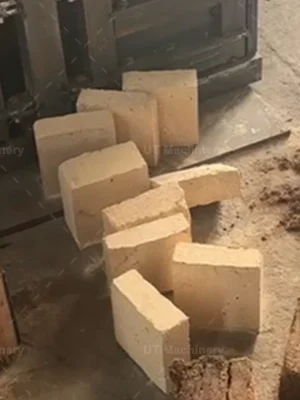
| Ideal Range | 15% – 20% | Perfect compression resistance, uniform density, clean block edges, stable weight, long mold-free storage life, consistent expansion performance. |
| Too Wet | Above 25% | Low block density, water extrusion under high pressure, spongy texture, high mold risk, longer post-production drying time, easy deformation after packaging. |
For standard 5kg export blocks, keep moisture strictly between 16%–18% for the most stable dimensional accuracy and weight consistency.
3. Reliable Coco Peat Moisture Testing Methods (Factory-Grade)
Visual guessing leads to inconsistent batches and customer complaints. Professional factories apply three-level moisture testing for daily production and export QC.
3.1 Hand Squeeze Field Test (Fast On-Site Check)
Grab a handful of mixed coco peat and squeeze firmly:
- Ideal moisture: Forms a tight clump, holds shape, breaks gently with light touch.
- Too wet: Water drips out or the clump feels sticky and muddy.
- Too dry: Peat falls apart immediately after releasing your hand.
3.2 Digital Moisture Meter Testing (Daily Production Control)
Use pin-type or probe-type moisture meters on mixing hoppers and conveyor belts to obtain real-time numerical data. This method standardizes daily production and avoids human error.
3.3 Laboratory Oven-Dry Test (Export Quality Inspection)
For high-standard export orders, conduct periodic oven-dry testing by weighing samples before and after thermal drying. This method delivers 100% accurate moisture data for bulk shipment certification.
4. Key Factors That Affect Coco Peat Moisture Absorption
Raw coco peat rarely arrives with uniform moisture. Multiple environmental and physical properties change moisture requirements during processing. To explore the foundational traits of coir materials, refer to our guide on what is coco peat.
- Raw Material Storage Conditions: Outdoor stored peat in rainy seasons can exceed 50% moisture, requiring forced drying before compression. Indoor dry-stored peat often needs slight humidity adjustment.
- Particle Size & Fiber Fineness: Fine peat particles feature larger surface areas and retain moisture longer than coarse long fibers. Fine peat requires stricter moisture control to avoid internal dampness.
- Fiber & Lignin Content: Low-EC washed coco peat and unwashed high-salt raw peat respond differently to hydraulic pressure. Organic composition directly affects bonding performance under the same moisture level.
5. Standard Workflow to Adjust Moisture Before Briquetting
Follow this standardized process to eliminate batch inconsistency and maximize pressing efficiency.
Raw Coco Peat Storage → Moisture Testing → Moisture Adjustment → Uniform Mixing → Stable Feeding → High-Pressure Briquetting
5.1 How to Fix Over-Wet Coco Pea
For moisture above 25%, use rotary dryer systems for fast industrial drying or spread peat in covered yards for natural air turning. Reduce material water content to 15%–20% before feeding.
5.2 How to Fix Over-Dry Coco Peat
For dusty, dry peat below 10%, use industrial mixers with atomized spray nozzles. Add water evenly during blending to avoid local mud pockets and ensure overall moisture uniformity.
6. Common Moisture-Related Defects & Quick Solutions
Most coco peat block quality issues trace back to unregulated moisture levels. Use this troubleshooting table for fast correction.
| Defect Symptom | Root Cause | Corrective Action |
| Block cracking & splitting | Moisture too low; low fiber elasticity | Slightly increase water spraying and extend mixing time |
| Unstable expansion ratio | Uneven moisture distribution in batches | Upgrade mixing uniformity and implement regular meter testing |
| Soft blocks & low density | Excessive moisture weakens compression bonding | Pre-dry raw material and lower feeding moisture |
| Machine overload & stalling | Over-saturated material clogs compression chamber | Reduce feeding speed and clear wet material batches |
7. Moisture Control Requirements for Coco Peat Briquetting Equipment
In commercial coco peat block production, moisture adjustment is usually carried out before the briquetting stage. Drying systems, storage equipment, and moisture testing methods help maintain consistent feeding conditions for hydraulic compression.
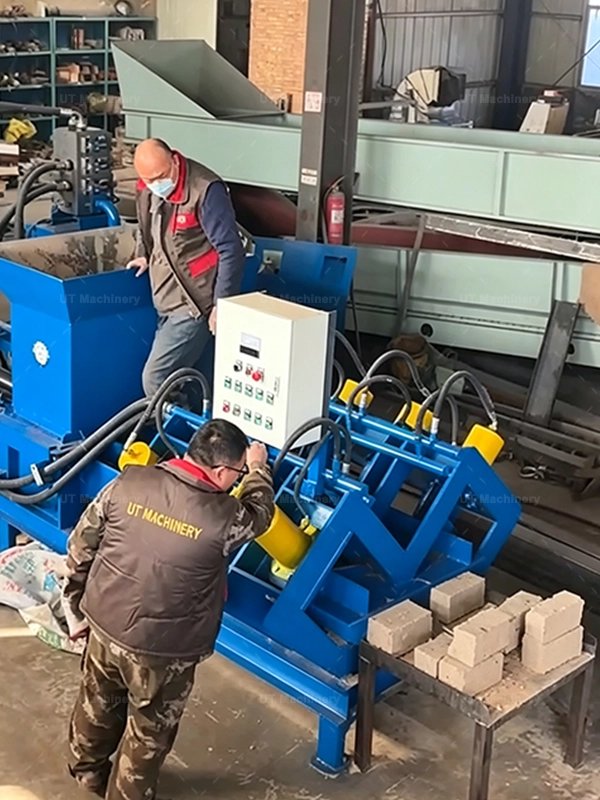
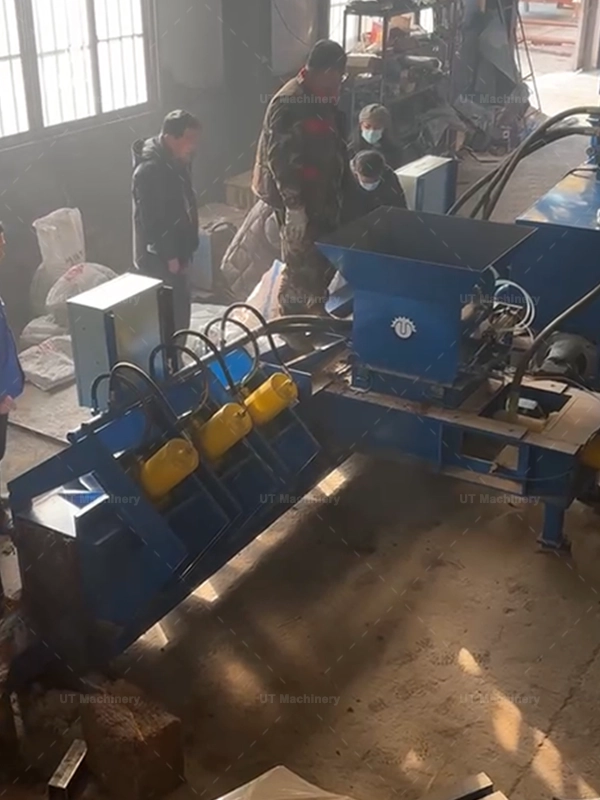
Hydraulic coco peat briquetting machines and automatic packaging systems require stable raw material conditions to achieve consistent forming performance. Proper moisture control helps reduce unstable feeding, minimize production interruptions, and maintain uniform block density during continuous operation.
Standardized moisture preparation is a practical way to improve production consistency, reduce defective blocks, and maintain stable output quality. In high-humidity tropical regions such as Indonesia, raw coir pith from coconut processing facilities often contains high moisture content before drying and compression. Establishing a suitable drying and preparation workflow is therefore important for stable coco peat block production.
Learn more about regional processing requirements through our Indonesia Coco Peat Briquetting Solution page, or explore equipment specifications on our coco peat briquette machine product page.
8. FAQ — Coco Peet Briquetting Moisture Control
What is the best moisture level for coco peat briquetting?
The ideal range is 15%–20%. For standard 5kg export blocks, 16%–18% moisture delivers the best density, hardness, and expansion performance.
Can I press wet coco peat directly?
No. Moisture over 25% produces soft, spongy blocks that deform easily, crack after packaging, and develop mold during sea shipping.
How does moisture affect coco peat block expansion?
Uneven moisture causes irregular internal fiber compression. End users will experience inconsistent expansion volume, which is a major reason for buyer returns.
Do I need a dryer for coco peat production?
If your raw materials are sourced in rainy seasons or stored in high-humidity environments, a professional rotary dryer is essential to stabilize moisture for continuous production.
How to guarantee consistent quality for 5kg coco peat blocks?
Strictly control moisture at 16%–18%, adopt precise volumetric feeding, and maintain uniform mixing. These steps ensure consistent weight, size, and density across all palletized blocks.