Our Products

UT Machinery, located in Gongyi City, Henan Province, China, has over 15 years of experience in manufacturing and R&D of metal briquette machines, biomass briquette machines, and related production lines. We specialize in designing, producing, and selling metal briquetting equipment, biomass briquetting equipment, single shredding and pressing machines, and providing complete production line solutions for efficient, intelligent, and eco-friendly manufacturing.

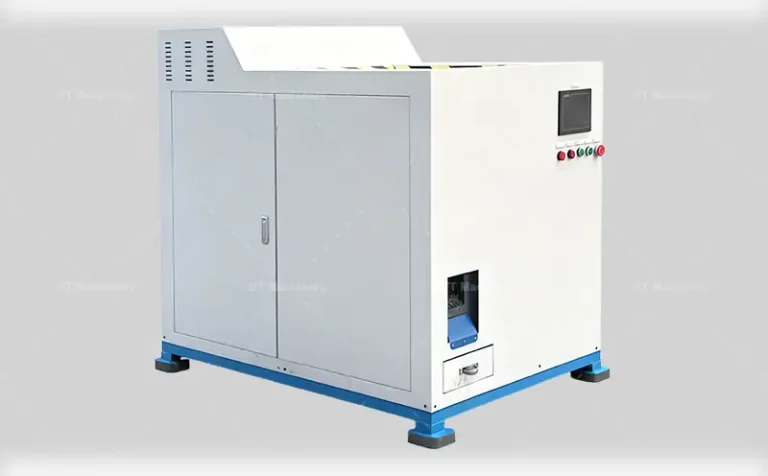
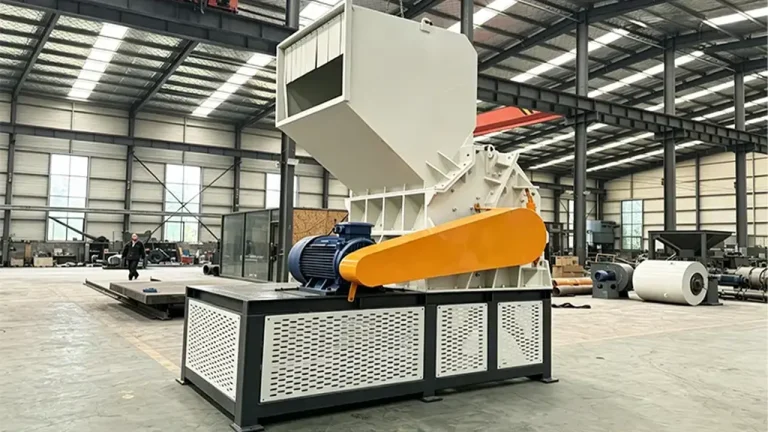
Industrial Metal Crusher

Product Overview Long, tangled metal scrap such as steel turnings, aluminum swarf, and copper chips occupies valuable storage space and often causes feeding problems in briquetting systems. The Industrial Metal Crusher is designed to reduce oversized metal scrap into uniform granules before briquetting. Using a low-speed, high-torque dual-shaft shearing system, it processes continuous machining waste into particles typically ranging from 10–50 mm, creating a consistent feedstock for downstream equipment. Suitable for steel, cast iron, aluminum, copper, and brass machining scrap, the crusher helps improve material handling, stabilize production, and increase briquette density in automated metal recycling lines. What Materials Can the Industrial Metal Crusher Process? Instead of manually cutting or handling bulky machining waste, the crusher automatically processes a wide variety of metal scrap generated during turning, milling, drilling, and machining operations. Suitable materials include: Long steel turnings Bird-nest steel swarf Cast iron borings Aluminum swarf and shavings Copper chips Brass turnings Wet metal chips containing cutting oil Mixed machining scrap Not recommended for: Solid metal blocks Heavy structural steel Thick steel plates over 10 mm Large forgings or castings Why Crush Metal Scrap Before Briquetting? Long metal turnings frequently bridge inside hoppers, wrap around feeding mechanisms, and interrupt continuous production. After crushing, uniformly sized particles offer several operational advantages: Without CrushingAfter CrushingTangled metal swarfUniform 10–50 mm granulesFrequent hopper bridgingSmooth material flowIrregular feedingStable automatic feedingLower briquette densityHigher compaction efficiencyMore operator interventionContinuous automated operation How the Crusher Fits into a Briquetting Line The Industrial Metal Crusher serves as the first processing stage in an automated metal briquetting system. Typical production flow: Metal Scrap → Industrial Metal Crusher → Belt Conveyor → Centrifugal Dewatering Machine → Hydraulic Briquetting Press → Finished Metal Briquettes Uniform particle size improves conveyor efficiency, increases oil recovery during centrifugal drying, and allows the briquetting press to produce denser, more consistent briquettes. Key Engineering Features High-Torque Dual-Shaft Shearing Two counter-rotating shafts operating at low speed generate high shearing force without excessive impact. Compared with high-speed hammer mills, this design reduces dust generation, lowers operating noise, and minimizes blade wear. Wear-Resistant Alloy Steel Blades Each cutter is manufactured from heat-treated SKD-11 / D2 chromium-molybdenum alloy steel with a hardness of HRC 58–62. The hook-shaped blade profile grips tangled machining scrap automatically, reducing the need for manual material preparation. Siemens PLC Protection System Current sensors continuously monitor shaft load. When oversized objects or unexpected overloads occur, the PLC automatically reverses shaft rotation to clear blockages, protecting both the gearbox and drive motor. Easy Maintenance A hydraulically opened split chamber provides quick access for inspection and cleaning. Individual blades can be replaced or re-sharpened independently, reducing maintenance cost and minimizing downtime. Technical Specifications ItemSpecificationCapacity0.5–5.0 T/H (Customizable)Output Size10–50 mmBlade MaterialD2 / SKD-11 Alloy SteelBlade HardnessHRC 58–62Crushing PrincipleDual-Shaft ShearingMotor Power15–75 kWControl SystemSiemens PLC(Customizable)IntegrationBelt Conveyor / Bucket Elevator Integration with Automated Recycling Systems The crusher can be integrated with complete metal chip recycling lines, including: Belt conveyor systems Screw conveyors Centrifugal dewatering machines Hydraulic metal briquetting presses Finished briquette conveying systems Each production line can be configured according to the customer's material type, required capacity, and factory layout. Material Testing & Line Design Support Not sure whether your machining scrap is suitable for crushing? Send us a sample of your material for evaluation. Our engineering team can provide: Crushing test videos using your own material Recommended particle size Equipment capacity recommendations Customized briquetting line layout Factory layout suggestions Request a Quote Tell us your material type, hourly capacity, and production requirements. Our engineers will recommend a suitable Industrial Metal Crusher configuration and provide a customized quotation together with a complete briquetting line proposal. Request a Customized Line Layout & Quote Frequently Asked Questions What output size can the Industrial Metal Crusher produce? Typical particle size ranges from 10–50 mm, depending on blade configuration and screen design. Can it process oily metal chips? Yes. Wet machining scrap containing cutting oil can be processed directly before centrifugal dewatering and briquetting. What materials can be crushed? Steel, cast iron, aluminum, copper, brass, stainless steel machining chips, and similar metal swarf. Can the crusher be integrated into an existing briquetting line? Yes. The machine can be connected with conveyors, dewatering systems, and hydraulic briquetting presses to form a complete automated recycling system.
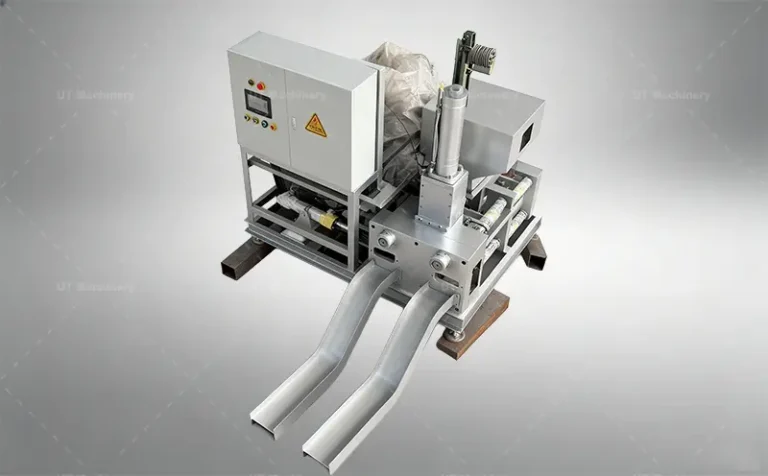
Dual Outlet Copper Chips Briquette Press

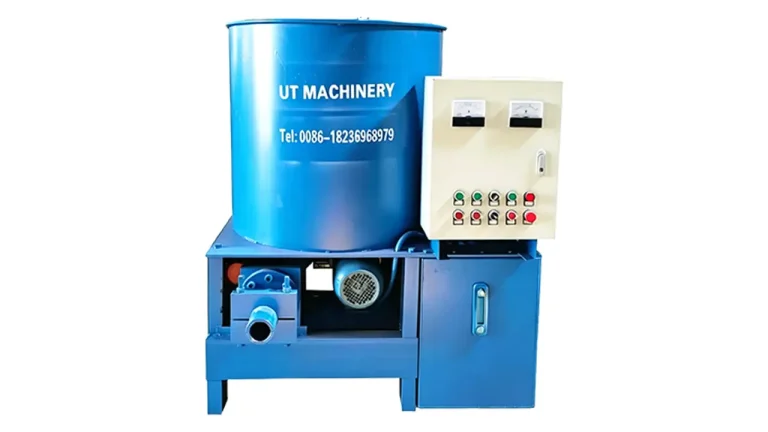
Challenges of Handling Loose Copper Chips in Machining Workshops In machining workshops, CNC Machining facilities, valve manufacturing plants, and automotive parts factories, large volumes of copper chips, copper swarf, and copper turnings are produced every day. Although copper scrap is valuable, handling loose material often creates unexpected costs for manufacturers. Loose machining swarf can quickly fill storage bins, contaminate the workshop with cutting fluid, and reduce the resale value of scrap copper. Many machining plants looking for a copper chip briquetting machine discover that managing loose metal swarf is far more expensive than expected. Common problems include: copper chips occupying excessive storage space cutting oil and cutting fluid trapped inside the material higher transportation costs for loose scrap lower scrap value due to oil contamination Over time, these factors reduce the real value of recyclable copper. For this reason, many machining plants begin searching for a Copper Chips Briquette Press or copper chip briquette press to improve copper chip recycling efficiency. The Hidden Cost of Copper Machining Scrap Copper chips generated during machining may look harmless, but they create several operational challenges. Bulky Scrap That Takes Up Valuable Space Loose copper swarf has very low bulk density. Even a moderate amount of machining waste can occupy large storage containers. Facilities producing copper components often find that scrap bins fill up quickly, requiring frequent scrap transport. Installing a copper chip briquetting machine can significantly reduce the volume of loose copper scrap. Cutting Fluid Loss During machining, copper chips absorb coolant, oil, and cutting fluid. Unpressed swarf can carry away up to 20% of its weight in expensive coolants. Our Copper Chips Briquette Press turns this waste into a liquid profit stream by recovering high-purity cutting oils for immediate reuse. Lower Scrap Market Value Scrap buyers prefer clean and dense copper material. Loose copper swarf or oily copper turnings are often discounted. Through copper scrap briquetting, loose material can be converted into dense copper briquettes that are easier for scrap yards to handle. Oxidation During Melting Loose copper turnings expose a large metal surface to air. This can increase oxidation during melting. Many smelters prefer feeding copper briquettes instead of loose machining swarf because they are denser and more stable. A Smarter Way to Recycle Copper Chips One widely used solution is copper swarf briquetting. A Copper Chips Briquette Press compresses loose copper chips, copper swarf, or copper powder into high-density briquettes through hydraulic pressure. During the briquetting process: loose copper swarf is compressed into solid briquettes trapped cutting oil and cutting fluid are squeezed out coolant and fluid can be collected and reused This process turns loose machining waste into dense copper briquettes that are easier to transport, store, and recycle. For many high-volume machine shops, installing a Copper Chips Briquette Press or copper chip briquetting machine is one of the most effective ways to improve copper chip recycling efficiency. Key Features of the Copper Chips Briquette Press High Pressure Briquetting The Copper Chips Briquette Press applies strong hydraulic pressure to compress loose copper swarf into dense briquettes. This greatly reduces the volume of machining scrap. Dual Discharge Structure The dual outlet design allows stable and continuous production. A copper chip briquetting machine with dual discharge can maintain consistent output when processing large quantities of copper turnings. Custom Briquette Size Briquette diameter and shape can be customized depending on furnace feeding requirements or scrap handling systems. Integrated Fluid Collection During briquetting, cutting oil and cutting fluid trapped in copper swarf are squeezed out. The liquid collection box integrated in the Copper Chips Durable Industrial Construction The machine frame and hydraulic system are designed for long-term industrial operation in machining workshops and recycling environments. Benefits for Copper Processing Plants 01 Recover Valuable Coolant The system squeezes cutting fluid from copper swarf, allowing coolant to be reused in machining processes. 02 Reduce Scrap Transport Costs Dense copper briquettes occupy far less space than loose swarf, improving storage and transportation efficiency. 03 Improve Scrap Handling Efficiency Copper briquettes are easier to store, stack, and transport compared with loose machining turnings. 04 Increase Scrap Value Simplifies reel loading/unloading, maximizesOverall Equipment Effectiveness (OEE). 05 Improve Workplace Cleanliness The machine helps reduce scattered swarf and oil leakage in machining workshops. Optional Copper Chip Recycling Line For facilities producing large quantities of copper machining waste, the briquetting machine can be integrated into a complete copper chip recycling line. A typical system may include: chip conveyor chip crusher or shredder chip centrifuge Hopper copper chip briquetting machine This system allows continuous processing of machining swarf automatically and improves overall recycling efficiency. Typical Applications The Copper Chips Briquetter is widely used in industries that generate copper machining scrap. Typical applications include: CNC machining workshops copper component manufacturing plants valve manufacturing facilities automotive parts factories non-ferrous metal processing plants scrap metal recycling facilities copper chip recycling operations These facilities often generate large volumes of copper swarf that can be efficiently recycled using a copper chip briquette press. FAQ Can copper chips be melted directly? Copper chips can be melted directly, but loose material is not always efficient for furnace feeding. Many smelters prefer compressed copper briquettes because they are easier to handle. Briquette size varies depending on Copper Swarf Briquetting Press configuration and furnace requirements. Can the machine process other metal chips? Yes. In addition to copper chips, the machine can process brass chips, aluminum chips, and other non-ferrous metal scraps. Do copper briquettes require binders? Most copper chip briquetting processes do not require binders. High hydraulic pressure via Copper Chips Briquette Press forms stable briquettes.

Rice Husk Briquette Machine

Looking for a cost-effective and eco-friendly way to process agricultural residues? Our rice husk briquette machine offers a high-return solution for transforming loose rice husks into high-density green fuel. Built for durability and performance, it is engineered to handle the unique challenges of high-silica materials. Processing rice husks is different from wood or sawdust due to high silica content, which can quickly wear out ordinary machinery. Our briquetter is specifically designed with: Reinforced Screw Propeller: Proprietary high-chromium alloy coating resists abrasion. Precision Heating System: Automatic temperature control ensures consistent lignin melting for stable briquette formation. Heavy-Duty Gearbox: Supports 24/7 industrial operation with minimal vibration. Technical Specifications & Performance Select the model that fits your production scale: Model NumberOutput Capacity (kg/h)Motor Power (kW)Final Briquette DiameterUT-RH-50250 - 3501550mm / 60mmUT-RH-80450 - 6002280mm Note: The Rice Husk Briquette Machine can be customized for voltage and frequency to meet international market standards. Economic Benefits of Rice Husk Briquettes Investing in a rice husk briquetting plant is not just about waste management — it is a profitable business opportunity: High Caloric Value: Stable burn with heating value around 3800–4200 kcal/kg. Strong Market Demand: Widely used in industrial boilers, power plants, and home heating as a carbon-neutral alternative to coal. Low Raw Material Cost: Turns abundant agricultural residues into valuable fuel instead of being discarded or burned. Get Your Customized Rice Husk Briquette Press Solution Turn agricultural waste into a profitable, eco-friendly energy source.Contact us today for a free ROI analysis and the latest price list. Request a Free Quote Now Frequently Asked Questions (FAQ) Q1: What output capacity can I expect from the rice husk briquette machine?A1: Depending on the model, capacity ranges from 250 kg/h to 600 kg/h. Q2: Can this machine handle high-silica rice husks?A2: Yes, our reinforced screw propeller is specifically designed to resist abrasion from high-silica materials. Q3: Can the machine be customized for my country's voltage and frequency?A3: Absolutely, all machines are adjustable for international electrical standards. Q4: What is the expected ROI for a rice husk briquetting plant?A4: ROI depends on production scale and local fuel prices, but with abundant raw materials and high market demand, many clients achieve break-even within 12–18 months.

Aluminum Swarf Briquetting Press

An Aluminum Swarf Briquetting Press compresses loose chips into dense, uniform briquettes, recovering up to 95% of coolant while producing a consistent, high-value material ready for recycling. These systems are also commonly called industrial aluminum chip compactors.

Corrugated Paper Briquette Press

Transform Cardboard & Paper Waste with Industrial Briquetting Technology Transform corrugated paper and cardboard waste into dense, stackable biofuel briquettes with the UT-100 Corrugated Paper Briquette Press. This industrial briquetting machine reduces disposal costs, reclaims up to 80% of warehouse space, and creates a new revenue stream from recycled paper. The Problem – Hidden Costs of Corrugated Paper Waste Loose corrugated paper and cardboard waste causes: High disposal fees from frequent dumpster pickups Valuable warehouse space consumed by bulky, low-density waste Labor costs for constant waste handling and cleanup Rising environmental compliance fees and landfill restrictions You're not just disposing of waste—you're losing potential profit. The Solution – Corrugated Paper Briquette Press Binderless Briquetting Technology – Nature Does the Work Unlike conventional balers that simply squeeze material, the UT-100 uses controlled hydraulic pressure to generate heat—activating the natural lignin within paper fibers. This biological polymer acts as a natural glue, fusing shredded corrugated paper into solid, durable briquettes. Why UT Machinery's binderless briquetting is different: No chemical binders = lower operating costs and pure briquettes Pressure curve optimized specifically for cellulose fibers Consistent results across varying material densities The result: rock-solid briquettes that hold together during transport and storage, ready for sale or recycling. 90% Volume Reduction – Reclaim Your Space Loose corrugated paper is mostly air. The UT-100 briquetting press compresses it into compact cylindrical briquettes: Recover up to 70-80% of previously wasted floor space Reduce transportation and disposal costs by up to 80% Stackable briquette logs for efficient storage and handling What used to require 10 truckloads now fits in just one. Industrial-Grade Briquetting Machine Construction Heavy-duty steel frame engineered for high-pressure briquetting Premium hydraulic components from trusted global suppliers Simplified design with fewer moving parts = less maintenance 24/7 operation capability for high-volume facilities Multi-Material Briquetting Versatility Handles multiple waste types efficiently: MaterialCommon ApplicationCorrugated cardboard (OCC)Trim waste, misprints, die-cut scrapPaper dust and sludgeFrom printing and converting operationsOffice paper wasteClean paper for high-value briquettesSawdust and wood shavingsCombined with paper for mixed biomassRice husks and agricultural fibersAgricultural waste briquetting One briquetting machine, multiple waste streams, one complete solution. Energy-Efficient Briquetting Operation 11 kW motor engineered for low power consumption Hydraulic system optimization reduces power draw during idle cycles High industrial output at minimal energy cost Lower energy costs mean faster ROI on your briquetting equipment investment. Technical Specifications – UT-100 Briquette Press Machine SpecificationDetailModelUT-100Machine TypeHydraulic Piston Corrugated Paper Briquette PressBriquetting ProcessBinderless (natural lignin activation)Briquette ShapeCylindricalBriquette Diameter70 mm(30-100mm,can be customized)Production Capacity100-500 kg/h (material dependent)Main Motor Power11 kWMachine Weight700 kgDimensions (L×W×H)1310 × 850 × 925 mmRequired Material Moisture12% - 18%Binder RequirementNone (natural lignin binding) Need a custom voltage configuration? [Contact our engineering team] The End Product – From Waste Paper to Valuable Resource Dimensions: 70mm diameter × variable length Density: 5-10x higher than loose material Calorific Value: ~4,000–4,500 kcal/kg (comparable to low-grade coal) Three ways to profit from your paper briquettes: Reduce disposal costs — fewer pickups, less labor, smaller dumpsters Sell as biofuel to industrial boilers or biomass plants Use for on-site heating — offset energy costs in winter months Applications – Who Uses This Briquetting Equipment IndustryApplicationKey BenefitCorrugated Box ManufacturingTrim waste, misprints, die-cut scrapReduce waste hauling costs by 80%Printing HousesPaper trim, misprints, clean room wasteSell briquettes as additional revenuePackaging PlantsIncoming cardboard wasteReclaim warehouse spaceRecycling CentersMaterial densification for transportLower shipping costs per tonDistribution WarehousesOngoing corrugated paper wasteEliminate daily dumpster pickupsWoodworking ShopsSawdust & paper mixed wasteOne machine for multiple waste types What Customers Say About Our Briquetting Machine "We were spending over $2,000 monthly on cardboard disposal. This Corrugated Paper Briquette Press paid for itself in 8 months. Now we sell briquettes locally." — Operations Manager, Packaging Facility, Thailand "Machine arrived well-packaged and running within hours. Simple, sturdy, delivers exactly as promised. The briquetting process is cleaner than we expected." — Owner, Recycling Center, Brazil "We were skeptical about binderless briquetting, but the UT-100 produces rock-solid briquettes from mixed paper waste. Two years later, it's still running strong." — Plant Director, Commercial Printing, Poland See what the UT-100 can do with YOUR material. [Request a free test] → At UT Machinery, we don't build machines for trade shows—we build them for factory floors. Every UT-100 Corrugated Paper Briquette Press is engineered with one philosophy: deliver maximum ROI with minimum complexity. When you choose UT Machinery, you're getting a briquetting solution backed by decades of engineering experience and a commitment to your success. Every Corrugated Paper Briquette Press from UT Machinery delivers ROI from day one. Ready to Transform Your Corrugated Paper Waste? Stop losing money on loose cardboard and paper. Start profiting from industrial briquetting with the UT-100 Corrugated Paper Briquette Press from UT Machinery. Request a Quote for Corrugated Paper Briquette Press Ask UT Machinery Engineers About Paper Waste Briquetting Request Material Testing on Your Waste Frequently Asked Questions About Paper Briquetting Press Q1: Can the Corrugated Paper Briquette Press handle staples or tape in cardboard recycling? A: Yes, small amounts are fine—they become encapsulated within the briquette. For premium briquettes intended for sale as biofuel, we recommend removing excessive contaminants. Q2: Does material need pre-shredding before briquetting? A: Yes, for optimal briquetting performance, ideal particle size is 10-50mm. UT Machinery can recommend appropriate shredding equipment for your input material. Q3: What if the corrugated paper is too wet for briquetting? A: Ideal moisture for paper briquetting is 12-18%. If your material exceeds this, we provide guidance on simple drying methods or pre-processing solutions. Q4: What voltage options are available for your briquetting equipment? A: Supported: 220V, 380V, 415V, 440V, 50Hz or 60Hz. Please specify your local requirements when requesting a quote. Q5: How difficult is briquetting machine installation? A: The UT-100 arrives fully assembled or in major sub-assemblies depending on shipping method. Basic positioning tools required. We provide detailed manuals and video support. Q6: What's the warranty on your briquette press? A: Standard warranty on major components. Terms vary by region and application—ask our team for details. Q7: Can I test my material on your briquetting equipment before buying? A: Yes! Send 10-20kg of your corrugated paper, cardboard, or mixed waste, and UT Machinery will run briquetting tests and provide video documentation of the results.

Dual-Outlet Hydraulic Wood Briquetting Machine

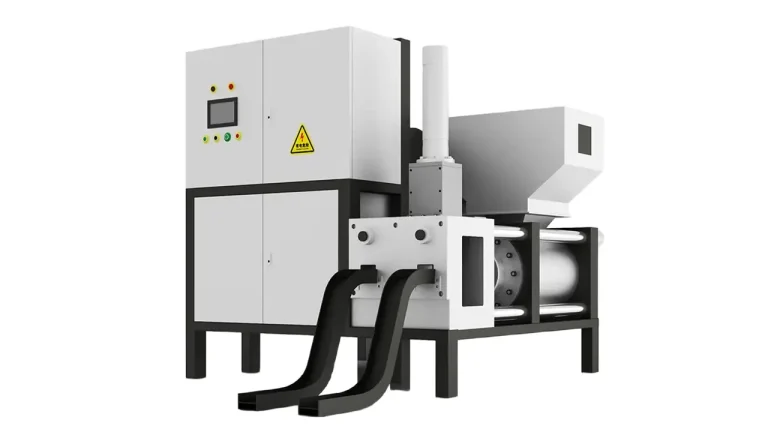
High-Efficiency Biomass Production with the Dual-Outlet Briquette Press Machine The UT-Series Dual-Outlet Hydraulic Wood Briquetting Machine is designed for industrial biomass compression and high-efficiency briquette production. This advanced hydraulic briquette press converts sawdust, wood shavings, bamboo powder, rice husks, and other agricultural residues into high-density, uniform rectangular fuel blocks with consistent calorific value and structural stability. With its synchronized dual-outlet design, this machine doubles your production capacity without expanding your factory footprint, making it ideal for small, medium, and large-scale biomass fuel manufacturing operations. The Efficiency Leap: Dual-Outlet Production System Traditional wood briquette press machines often operate with a single discharge path, limiting throughput and creating production bottlenecks. The UT-Series addresses this with a dual-outlet discharge system, forming two briquettes simultaneously. Key Advantages: Double the Output: Produce twice as many briquettes per hour compared to standard single-head presses. Stable Continuous Operation: Smooth, uninterrupted production reduces downtime and improves operational rhythm. Optimized Energy Efficiency: Less energy consumed per ton of material processed, maximizing cost-effectiveness. Scalable Solution: Perfect for medium and large-scale biomass fuel manufacturing plants or renewable energy facilities. Hydraulic Compaction vs. Mechanical Punching Unlike mechanical impact briquetting machines, which rely on repeated stamping and generate vibration, noise, and wear, this hydraulic briquette press applies controlled, constant pressure. Benefits Include: High-Density Briquettes: Blocks burn longer and have higher market value. Low Noise & Vibration: Creates a safer, quieter, and more professional working environment. Extended Service Life: Fewer moving parts under stress reduce maintenance and component wear. Consistent Quality: Hydraulic precision maintains block integrity even with variable raw material moisture content. Custom Rectangular Briquette Production Our standard configuration produces precision rectangular (cuboid) briquettes, ideal for: Logistics Efficiency: Stackable and optimized for container transport and palletizing. Retail Packaging: Smooth edges for consumer-ready fuel blocks. Customizable Options: Adjustable length, width, and thickness Modular molds for specific combustion systems or industrial boilers Optional high-density configurations for specialized energy applications This flexibility ensures that your biomass fuel blocks meet diverse industrial and market requirements. Key Features of Our Dual-Outlet Hydraulic Wood Briquetting Machine FeatureIndustrial SpecificationDrive SystemHigh-pressure hydraulic system designed for stable, high-density wood briquette compressionDischarge StructureDual synchronized outlets to double production efficiency without expanding factory spaceStandard ShapePrecision rectangular / cuboid blocks for easy palletizing and export logisticsCustomizationAdjustable mold sizes and dimensions to meet diverse biomass fuel requirementsMaterial CompatibilitySawdust, wood shavings, bamboo, rice husks, and other agricultural residuesControl SystemAutomated PLC operation with safety protection for continuous, reliable performanceApplicationsIndustrial biomass fuel production, wood waste recycling, and sustainable energy projects Recommended Biomass Raw Materials for Hydraulic Wood Briquetting Sawdust – Ideal for high-density wood briquettes with stable calorific value Wood Shavings – Perfect for industrial fuel block production and efficient compression Bamboo Powder – Suitable for renewable energy biomass briquettes Rice Husks – Lightweight raw material compatible with dual-outlet briquetting Agricultural Residues – Efficient recycling of waste materials into fuel blocks Coconut Shells (Pre-Crushed) – Creates durable, long-burning briquettes Tip: Optimal moisture content is 8–15% to ensure consistent briquette density, minimal mold wear, and maximum hydraulic press efficiency. Key Application Industries for Dual-Outlet Hydraulic Briquetting Press Biomass Fuel Plants: High-throughput production of commercial briquettes Renewable Energy Projects: Converting agricultural and wood waste into sustainable energy sources Furniture and Wood Processing Factories: Recycling offcuts and sawdust into valuable fuel blocks Agricultural Waste Recycling Facilities: Transform crop residues into industrial briquettes Industrial Fuel Block Production for Export Markets: Consistent, pallet-ready rectangular blocks suitable for international shipping Whether you operate a biomass fuel plant, a furniture factory recycling wood waste, or a renewable energy facility, this dual-outlet hydraulic wood briquetting machine provides a scalable and efficient solution for sustainable fuel block production. FAQ – Dual-Outlet Hydraulic Wood Briquetting Machine Q1: What types of raw materials can this hydraulic wood briquetting machine process?A: This machine is suitable for a wide range of biomass raw materials, including sawdust, wood shavings, bamboo powder, rice husks, coconut shells (pre-crushed), and other agricultural residues. Optimal moisture content is 8–15% for consistent briquette density and minimal mold wear. Q2: What are the advantages of a dual-outlet hydraulic briquette press compared to a single-outlet machine?A: A dual-outlet design allows simultaneous briquette production on two channels, doubling output per hour without increasing factory footprint. It also ensures stable continuous operation and higher energy efficiency, making it ideal for medium to large-scale biomass fuel production. Q3: Can the size and shape of briquettes be customized?A: Yes, the machine features adjustable molds, allowing you to produce rectangular (cuboid) blocks in various lengths, widths, and thicknesses to match industrial boilers, retail packaging, or export standards. Q4: What industries commonly use this hydraulic wood briquetting machine?A: Typical applications include biomass fuel plants, renewable energy projects, furniture and wood processing factories, agricultural waste recycling facilities, and industrial fuel block production for export markets. Q5: How does the hydraulic compaction system compare with mechanical punching machines?A: Hydraulic compaction provides controlled, constant pressure for uniform, high-density briquettes. It reduces vibration, noise, and wear, extends service life, and ensures consistent block quality even with slight variations in raw material moisture. Q6: What is the expected production capacity?A: Production capacity depends on raw material type, moisture content, and mold size. Compared to traditional single-outlet machines, a dual-outlet hydraulic briquette press can nearly double throughput while maintaining consistent quality. Q7: How is the machine controlled and operated safely?A: The UT-Series machine uses an automated PLC system with built-in safety protection. This ensures continuous operation, minimizes manual intervention, and protects operators from hazards while maintaining stable production. Q8: Can this machine be integrated into a larger biomass production line?A: Absolutely. Its modular design and dual-outlet system make it easy to integrate into biomass fuel production lines, including conveyors, dryers, and packaging systems, for fully automated operations.

Fully Automated Biomass Briquette Production Line

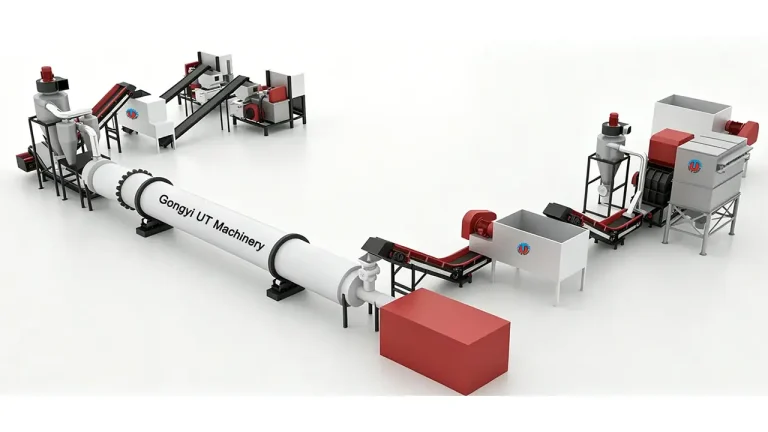
Overview: Turn Waste into "Green Coal" UT Machinery’s Biomass Briquette Production Line transforms forestry and agricultural residues—such as sawdust, wood chips, rice husks, and stalks—into high-density, solid fuel sticks. Engineered for 24/7 continuous operation, this line produces briquettes with superior density (1.2–1.4 g/cm³), longer burn time, and easier handling. These premium fuel sticks are ideal for industrial boilers, power plants, and luxury fireplaces. Unlike standard briquetting equipment, our integrated biomass briquette press solution ensures consistent moisture control, uniform density, and maximum energy efficiency throughout the production process. Optimized Process Flow (Engineering Edge) Our turnkey line manages moisture, density, and material flow at every stage to deliver reliable, high-density solid briquettes: Briquette Process Flow : Raw Material Bin → Crusher / Pulverizer → Cyclone Dust Collector → Intermediate Storage Bin → Hot Air Furnace → Rotary Dryer → Dust Collector + Storage Bin → Distribution Bin → Briquette Machine 01 Raw Material Handling High-capacity Raw Material Bins with automated feeders maintain a steady supply of biomass, ensuring uninterrupted production for industrial-scale operations. 02 Precision Size Reduction The Crusher/Pulverizer reduces raw material to an optimal 3–5 mm size, essential for uniform, high-density briquetting. 03 Advanced Dust Management An integrated Cyclone Dust Collector removes fine particulates, maintaining a clean and safe workspace compliant with global EHS standards. 04 Buffering System The Intermediate Storage Bin balances material flow between crushing and drying, eliminating bottlenecks and ensuring continuous throughput. 05 Smart Thermal Control The Hot Air Furnace preheats the biomass for the Rotary Dryer, lowering moisture content to the ideal 8–12% "Golden Ratio" for solid briquette formation. 06 Intelligent Distribution The proprietary Distribution Bin evenly feeds dried biomass to multiple briquette machines, enabling scalable production while preserving material consistency. 07 High-Pressure Forming Using Lignin-Plasticization Technology, the briquette machines produce 100% solid round or square fuel sticks without chemical binders. High pressure and temperatures above 300°C activate natural lignin as a binder. Technical Specifications FeatureIndustrial SpecificationProduction Capacity 500 kg/h – 10 t/h (Fully Customizable)Briquette Structure100% Solid (No inner hole)Briquette ShapeSolid Cylindrical (Round) or Solid Quadrangular (Square)Final Density1.2 – 1.4 g/cm³Screw Service Life≥ 800 hours (Proprietary Wear-Resistant Alloy)Moisture Range8% – 12% (Optimized for forming)Automation LevelFully Automatic (PLC Smart Control Optional) Why Choose UT Machinery’s Production Line? 01 Modular Scalability Start with two briquette machines and expand to six or more using the same drying system. The Distribution Bin allows growth while lowering initial CAPEX. 02 Proprietary Alloy Technology Our core screws use a proprietary wear-resistant coating, lasting 3x longer than standard parts, reducing downtime and maintenance costs. 03 Solid Briquette Advantage Solid briquettes have a higher energy-per-volume ratio than hollow ones. They are easier to transport, stronger, and preferred for industrial power plants due to consistent burn rate. 04 Energy-Efficient Drying The Rotary Dryer uses heat-recycling logic, reducing fuel consumption by up to 15% compared to traditional systems. 05 Global Compliance Dual-stage dust collection ensures compliance with international environmental and safety standards, simplifying inspections and approvals. Take the Next Step Ready to launch your biomass energy project? UT Machinery provides custom CAD factory layouts and detailed ROI analysis tailored to your local biomass costs. Get a Free Quote Now Download Technical Catalog Frequently Asked Questions Q: Is the ROI high for a biomass briquette line?A: Yes. Most clients achieve a full ROI within 8–14 months. High-density solid briquettes sell at a premium in the global green energy market, outperforming loose biomass or hollow briquettes. Q: Can I process different materials like rice husks, coconut shells, or straw?A: Absolutely. Our system supports various biomass types. Frequency-conversion feeders allow adjustment for material density, moisture, and hardness. Q: Do biomass briquettes require chemical binders?A: No. Natural lignin in the biomass acts as a binder under high pressure and temperatures above 300°C, producing rock-solid, high-density briquettes. Q: Are the briquettes solid or hollow?A: All briquettes are 100% solid, available in round or square shapes, with no inner hole, ensuring superior strength and consistent burn. Q: Can this line support industrial-scale production?A: Yes. The modular, fully automated line is suitable for workshops, industrial plants, and biomass energy projects requiring high throughput.
Contact

GET AN EXPERT QUOTE

Share your raw material and capacity requirements — our engineering team will provide a tailored briquetting solution within 24 hours.