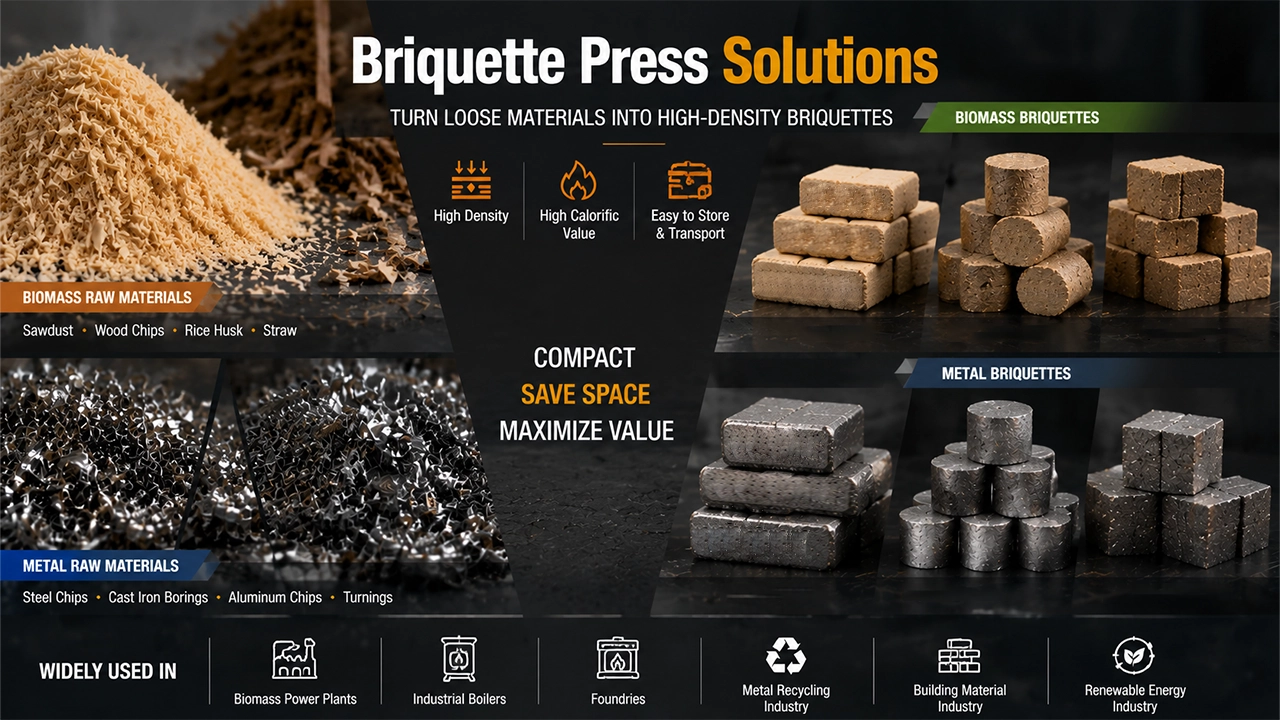
The Complete Guide to Briquette Press Machines: Types, Working Principle, Applications and Selection
A briquette press machine converts loose industrial waste materials into compact briquettes through controlled compression. This guide covers the working principles, machine types, material applications, production processes, and key factors to consider when selecting briquetting equipment for different industrial requirements.
The Complete Guide to Briquette Press Machines: Types, Applications & Selection
Introduction
Industrial production processes generate large amounts of loose waste materials every day. Metal processing plants produce steel chips, cast iron borings, aluminum chips, and other machining residues. Woodworking factories, sawmills, and agricultural processing facilities generate sawdust, wood waste, and various biomass residues.
These materials usually have low bulk density, which creates challenges in storage, transportation, handling, and recycling. Loose metal chips may occupy large storage areas and contain residual cutting fluids, while biomass materials often require additional treatment before they can be reused or converted into fuel products.
A briquette press machine provides a practical method to convert loose materials into compact briquettes through controlled compression. By increasing material density, briquetting helps improve material handling, reduce storage requirements, and prepare waste materials for recycling or further utilization.
However, briquetting is not a one-size-fits-all process. Different materials require different machine structures, pressing forces, feeding systems, and preparation methods.
For example:
- Metal chips from CNC machining may require crushing and oil separation before compression.
- Biomass materials usually require moisture control and particle size adjustment.
- Wood waste may require proper preparation to achieve stable briquette formation.
Selecting the correct briquette press machine depends on understanding the raw material characteristics, required production capacity, and final application.
This guide explains how briquette press machines work, the main machine types, material applications, production line configurations, and important factors to consider before choosing industrial briquetting equipment.
What Is a Briquette Press Machine?
A briquette press machine is industrial equipment designed to compress loose materials into dense briquettes by applying mechanical or hydraulic pressure.
During the briquetting process, prepared raw materials are fed into a compression chamber. The machine applies controlled force to remove air gaps between particles and form compact briquettes with a stable shape.
Depending on the machine design, compression force can be generated through different mechanisms, including:
- Hydraulic cylinders
- Mechanical stamping systems
- Piston mechanisms
- Screw extrusion systems
Briquette press machines are widely used for processing different types of materials, including:
- Metal chips and machining residues
- Sawdust and wood waste
- Agricultural biomass
- Charcoal powder
- Coal fines
The purpose of briquetting depends on the material being processed.
For metal processing factories, briquetting is mainly used to reduce the volume of loose metal residues, improve storage efficiency, and simplify recycling handling. A dedicated [Metal Briquette Machine] is commonly used for materials such as steel chips, cast iron borings, aluminum chips, and other machining waste.
For biomass and wood processing industries, briquetting converts loose materials into compact fuel blocks or easily handled products. A suitable [Biomass Briquette Machine] can process prepared biomass materials according to different production requirements.
Although the applications are different, the basic principle remains the same: increasing material density through controlled compression.
How Does a Briquette Press Work?
A briquette press machine transforms loose materials into compact briquettes through several important processing stages.
The complete process usually includes:
- Material preparation
- Controlled feeding
- Compression
- Briquette discharge
Each stage affects the final briquette quality and machine performance.
1.Material Preparation
Before entering the briquette press, raw materials usually require preparation according to their physical characteristics.
The preparation process depends mainly on the material type.
Metal Materials
Metal chips generated from machining operations often have irregular shapes and may contain cutting oil or coolant.
Common preparation processes include:
- Crushing or shredding oversized chips
- Removing excessive cutting fluids
- Adjusting material size for stable feeding
Long and tangled metal turnings can affect feeding consistency and reduce briquetting performance if they enter the machine directly.
For larger metal recycling applications, a complete [Metal Chip Recycling Solution] can integrate chip crushing, oil separation, feeding, and briquetting equipment.
Biomass Materials
Biomass materials usually require different preparation methods.
Common processes include:
- Crushing
- Drying
- Particle size adjustment
Moisture content is one of the most important factors affecting biomass briquetting. Materials with excessive moisture may have poor forming performance and require drying before compression.
In a complete biomass processing system, a [Rotary Dryer] may be installed before the briquette press to control material moisture.
2.Controlled Feeding
After preparation, materials are delivered into the compression chamber through a feeding system.
Stable feeding is important because uneven material supply can affect:
- Briquette density
- Production capacity
- Machine operating stability
Different materials require different feeding methods.
For example:
- Heavy metal chips usually require controlled feeding systems designed for dense materials.
- Lightweight biomass materials require consistent feeding to prevent production fluctuations.
A properly designed feeding system helps maintain stable pressure and continuous operation.
3.Compression Process
Inside the compression chamber, the briquette press applies pressure to compact the material.
The compression method depends on the machine structure.
Hydraulic Compression
Hydraulic briquette presses use hydraulic cylinders to generate pressing force.
The hydraulic system provides controlled pressure and is suitable for applications requiring strong compression.
Common applications include:
- Metal chip briquetting
- Aluminum scrap briquetting
- Cast iron residue processing
- Biomass applications requiring controlled compression
Mechanical Compression
Mechanical briquette presses use flywheels, crank mechanisms, or stamping systems to generate repeated compression movements.
They are commonly used for continuous biomass production where stable output is required.
Typical materials include:
- Sawdust
- Wood particles
- Agricultural residues
Screw Compression
Screw briquette machines use a rotating screw mechanism to continuously compress materials through an extrusion process.
They are often used for specific biomass and charcoal applications where continuous forming is required.
4.Briquette Forming and Discharge
After reaching the required compression level, the finished briquette is discharged from the forming chamber.
The final briquette shape depends on:
- Machine design
- Material characteristics
- Customer requirements
Common briquette shapes include:
- Cylindrical blocks
- Rectangular briquettes
- Square blocks
- Customized profiles
The finished briquettes can then be stored, transported, recycled, or used according to their intended application.
Types of Briquette Press Machines
Briquette press machines can be classified according to their pressing mechanism and operating principle.
Although all briquette presses use compression technology, different machine designs are developed for different material conditions, production capacities, and operating requirements.
The main industrial briquette press types include hydraulic briquette presses, mechanical stamping presses, piston briquette presses, and other specialized briquetting systems.
1.Hydraulic Briquette Press
A hydraulic briquette press uses hydraulic cylinders to generate compression force.
Because hydraulic systems provide stable and adjustable pressure, they are widely used for materials that require strong forming force.
Hydraulic briquette presses are commonly applied in metal recycling industries for processing:
- Steel chips
- Cast iron borings
- Aluminum chips
- Copper and brass residues
During machining operations, metal waste is often generated in loose forms that are difficult to store and transport efficiently. Hydraulic briquetting equipment compresses these residues into dense briquettes for easier handling and recycling.
Hydraulic presses can also be used for biomass applications where controlled compression is required.
Key characteristics include:
- Adjustable pressing pressure
- Stable compression process
- Suitable for different material densities
- Flexible configuration options
For biomass applications, a [Hydraulic Biomass Briquette Press] can be selected according to raw material characteristics and required output.
2.Mechanical Stamping Briquette Press
A mechanical stamping briquette press uses a mechanical transmission system to generate repeated pressing movements.
Compared with hydraulic systems, mechanical presses are generally designed for continuous operation with higher pressing cycles.
They are commonly used for biomass materials such as:
- Sawdust
- Wood waste
- Agricultural residues
The performance of mechanical briquette presses depends strongly on raw material preparation. Consistent particle size and suitable moisture content help maintain stable production.
Typical applications include:
- Wood processing plants
- Biomass fuel production
- Agricultural waste utilization
3.Piston Briquette Press
A piston briquette press uses a reciprocating piston to compress material inside a forming chamber.
During operation, the piston repeatedly pushes prepared material forward, forming continuous briquette blocks or logs.
Piston briquette presses are commonly used for:
- Sawdust
- Wood shavings
- Biomass residues
They are suitable for applications requiring compact equipment design and stable briquette production.
Important factors affecting performance include:
- Material preparation
- Moisture content
- Particle size
- Required production capacity
4.Other Briquetting Technologies
Besides hydraulic, mechanical, and piston briquette presses, other technologies are used for specific applications.
Examples include:
Screw Briquette Machines
Screw systems use continuous extrusion to form briquettes.
They are commonly used for certain biomass and charcoal applications where continuous production and specific briquette shapes are required.
Roller Press Systems
Roller presses use two rotating rollers to compress fine materials into shaped briquettes.
They are often used for:
- Coal powder
- Charcoal powder
- Mineral materials
The correct briquetting technology depends on the material properties, production requirements, and final product purpose.
A suitable briquette press should be selected based on the complete production process rather than only the pressing mechanism.
Briquette Press Machines by Material
The selection of a briquette press machine depends largely on the characteristics of the raw material. Although different briquetting machines use similar compression principles, materials with different density, moisture content, particle structure, and recycling requirements need different machine configurations.
For example, metal chips generated from machining operations usually require high compression force and may contain cutting fluids that need to be separated. Biomass materials are much lighter and often require drying and size adjustment before pressing.
Choosing equipment according to material characteristics helps ensure stable operation, consistent briquette quality, and suitable production performance.
Based on the processed material, briquette press machines are commonly divided into:
- Metal briquette machines
- Biomass briquette machines
- Wood briquette machines
- Charcoal briquette machines
- Coal briquette machines
1.Metal Briquette Machine
A metal briquette machine is designed for compressing metal processing residues into dense briquettes for recycling, storage, and transportation.
Metal processing industries generate large amounts of loose scrap materials during machining operations. CNC machining centers, turning machines, milling machines, and other metalworking equipment produce chips and borings that often have irregular shapes and low storage efficiency.
Common materials processed by metal briquette machines include:
- Steel chips
- Cast iron borings
- Aluminum chips
- Copper chips
- Brass residues
- Other ferrous and non-ferrous metal scraps
Compared with loose metal scrap, briquetted metal materials have several practical advantages:
- Reduced storage volume
- Easier transportation and handling
- Improved recycling management
- Better material feeding during melting processes
Metal Chip Preparation Before Briquetting
The condition of metal chips has a direct influence on briquetting performance.
In many machining factories, metal chips are mixed with cutting oil or coolant after production. Long and tangled chips can also create feeding problems.
Therefore, a complete metal briquetting process may include:
Metal Scrap Collection → Crushing → Oil Separation → Storage → Briquetting
Crushing
Metal shredding or crushing equipment can reduce oversized and tangled chips into smaller pieces that are easier to feed.
Oil Separation
Removing excess cutting fluids improves material handling and allows valuable coolant to be recovered.
For larger recycling projects, a complete [Metal Chip Recycling Solution] can integrate crushing, de-oiling, feeding, and briquetting equipment into one system.
Briquetting
After preparation, the metal residues enter the briquette press where hydraulic pressure compresses the material into dense briquettes.
A [Metal Briquette Machine] is commonly selected according to:
- Metal type
- Chip shape
- Daily scrap volume
- Required briquette density
- Recycling process requirements
Applications of Metal Briquetting
Metal briquette machines are widely used in industries such as:
- CNC machining factories
- Automotive parts manufacturing
- Foundries
- Metal fabrication plants
- Aluminum processing facilities
For factories producing large amounts of machining waste, briquetting provides a more organized method of handling metal residues compared with storing and transporting loose chips.
2.Biomass Briquette Machine
A biomass briquette machine is used to compress agricultural and plant-based materials into compact briquettes.
Many industries generate biomass residues during production, including agriculture, forestry, woodworking, and food processing. These materials usually have low bulk density, making storage and transportation difficult.
Briquetting converts these loose materials into denser forms that are easier to handle and can be used for fuel applications.
Common biomass materials include:
- Rice husk
- Straw
- Corn stalks
- Bamboo residues
- Coconut shell
- Agricultural waste
- Other plant-based materials
Biomass Preparation Requirements
Unlike metal materials, biomass briquetting performance is strongly affected by moisture content and particle size.
Before compression, biomass materials may require:
Crushing
Large or uneven materials are reduced into suitable particle sizes to improve feeding and compression.
Drying
Excess moisture can reduce briquette strength and affect forming stability.
For biomass materials with high moisture content, a [Rotary Dryer] can be integrated into the production process to achieve suitable drying conditions.
Feeding Control
Because biomass materials usually have lower density, stable feeding is important for maintaining consistent production.
Biomass Briquetting Applications
Biomass briquette machines are commonly used in:
- Agricultural waste processing
- Wood waste recycling
- Biomass fuel production
- Renewable energy projects
Depending on the material type and production capacity, customers may select different machine structures, including hydraulic or mechanical briquette presses.
A [Hydraulic Biomass Briquette Press] is suitable for applications requiring controlled compression and flexible operation.
For larger production requirements, a complete [Briquette Production Line] can combine crushing, drying, storage, feeding, and briquetting equipment.
3.Wood Briquette Machine
A wood briquette machine is designed for processing wood-related waste materials generated from woodworking operations.
Wood processing industries produce large quantities of sawdust, wood chips, and shavings during cutting and manufacturing processes. Without proper treatment, these materials require significant storage space and create additional waste-handling requirements.
Common wood materials include:
- Sawdust
- Wood shavings
- Wood chips
- Timber processing residues
Wood briquetting relies on proper material preparation and suitable compression conditions.
Unlike metal materials, wood contains natural lignin, which can help bind particles during compression when suitable pressure and temperature conditions are achieved.
Important factors affecting wood briquette quality include:
- Moisture content
- Particle size
- Wood species
- Compression pressure
Wood briquette machines are commonly used in:
- Sawmills
- Furniture factories
- Wood processing plants
- Biomass fuel production facilities
A suitable [Wood Briquette Machine] can be selected according to the raw material condition and required production output.
4.Charcoal Briquette Machine
A charcoal briquette machine is used to compress charcoal powder and fine carbon materials into uniform briquettes.
During charcoal production and processing, fine particles and powder materials are often generated. These materials are difficult to handle directly and usually require further forming before commercial use.
Common raw materials include:
- Charcoal powder
- Charcoal fines
- Carbonized biomass materials
Compared with wood and biomass briquetting, charcoal briquetting often requires additional considerations, such as:
- Binder addition
- Mixing process
- Briquette shape requirements
- Drying after forming
The final product may be produced in different shapes depending on application requirements.
Charcoal briquette machines are commonly used for:
- Barbecue charcoal production
- Fuel briquette manufacturing
- Carbon material processing
5.Coal Briquette Machine
A coal briquette machine is designed for compressing coal powder and fine coal materials into larger briquettes.
Coal processing operations may generate fine particles that are difficult to transport and utilize directly. Briquetting provides a method to convert these materials into more manageable forms.
Common applications include:
- Coal dust recycling
- Industrial fuel preparation
- Coal residue utilization
Coal materials usually have different forming characteristics depending on coal type, particle size, and application requirements.
Some coal briquetting processes may require:
- Binder systems
- Mixing equipment
- Specific forming technologies
Compared with metal and biomass briquetting, coal briquetting focuses more on fuel characteristics and final combustion requirements.
Selecting a Briquette Press Based on Material Characteristics
The same briquette press machine cannot be applied equally to every material.
Before selecting equipment, customers should evaluate:
Material Type
Different materials require different compression methods.
For example:
- Metal chips require high-pressure compression.
- Biomass requires moisture and particle size control.
- Charcoal and coal powders may require binders.
Material Condition
Important factors include:
- Moisture content
- Particle size
- Bulk density
- Material consistency
Production Requirements
The required machine configuration depends on:
- Hourly output
- Working hours
- Automation requirements
- Available installation space
A correct match between raw material characteristics and machine design is the foundation of stable briquetting operation.
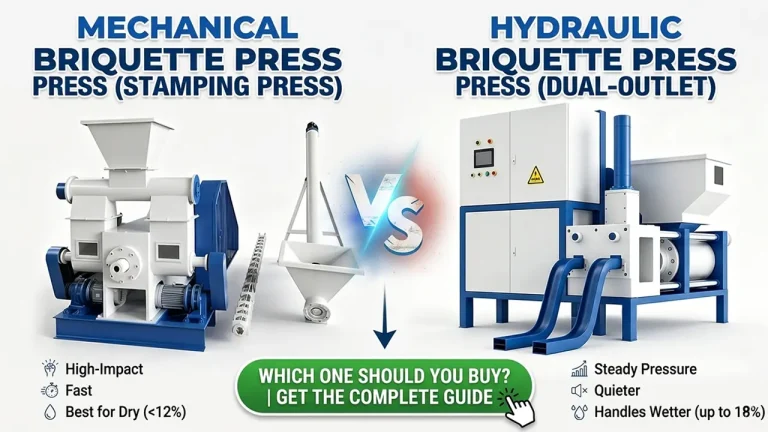
Hydraulic vs Mechanical Briquette Press
When selecting a briquette press machine, one of the most important decisions is choosing between hydraulic and mechanical pressing systems.
Both technologies use compression force to form dense briquettes, but their operating principles, suitable materials, production characteristics, and maintenance requirements are different.
The correct choice depends on factors such as:
- Raw material characteristics
- Required production capacity
- Operating hours
- Briquette density requirements
- Factory automation level
Hydraulic Briquette Press
A hydraulic briquette press uses a hydraulic power system to drive cylinders that compress the material inside the forming chamber.
Because hydraulic pressure can be adjusted according to material conditions, hydraulic briquette presses are widely used for materials requiring high compression force and stable pressing control.
Typical applications include:
- Steel chips
- Cast iron borings
- Aluminum chips
- Copper and brass residues
- Certain biomass materials
Advantages of Hydraulic Systems
Hydraulic briquette presses provide several practical characteristics:
Adjustable Compression Pressure
The pressing force can be adjusted according to different material densities and forming requirements.
This makes hydraulic systems suitable for processing various metal materials with different physical properties.
Stable Pressing Process
Hydraulic systems apply pressure gradually and consistently, which helps produce uniform briquettes.
Flexible Production Requirements
Hydraulic presses can be configured for different production scales, from small batch operations to continuous industrial applications.
Mechanical Briquette Press
A mechanical briquette press uses a motor-driven flywheel and mechanical transmission system to generate repeated compression movements.
Mechanical systems are commonly used in continuous biomass production where high production speed is required.
Typical materials include:
- Sawdust
- Wood waste
- Agricultural residues
- Biomass fuel materials
Characteristics of Mechanical Systems
Continuous Operation
Mechanical presses are designed for long-term operation and are suitable for production lines requiring stable output.
Higher Production Speed
Compared with hydraulic systems, mechanical stamping presses generally provide faster pressing cycles.
Material Preparation Requirements
Mechanical presses usually require more consistent raw material conditions, including:
- Stable particle size
- Controlled moisture content
- Uniform feeding
Hydraulic vs Mechanical Briquette Press Comparison
| Comparison Item | Hydraulic Briquette Press | Mechanical Briquette Press |
|---|---|---|
| Pressing Method | Hydraulic cylinder compression | Mechanical stamping movement |
| Suitable Materials | Metal chips, heavy residues, some biomass | Wood waste, sawdust, biomass |
| Pressure Control | Adjustable | Fixed mechanical stroke |
| Production Mode | Batch or continuous operation | Continuous production |
| Material Requirements | More flexible | Requires stable material preparation |
| Typical Applications | Metal recycling, industrial waste processing | Biomass fuel production |
In practice, the machine type should be selected according to the material rather than only production capacity.
A high-output machine is not always the best choice if the raw material is not suitable for its working principle.
Metal Briquetting vs Biomass Briquetting
Although both metal and biomass materials can be processed using briquetting technology, their physical characteristics and production requirements are significantly different.
Understanding these differences is important when selecting equipment.
Metal Briquetting
Metal briquetting focuses mainly on recycling and material handling improvement.
Metal chips generated during machining often have:
- Irregular shapes
- High bulk volume
- Residual cutting fluids
- High material value
The main purposes of metal briquetting include:
- Reducing scrap volume
- Improving storage efficiency
- Simplifying transportation
- Preparing materials for recycling processes
Important Considerations for Metal Briquetting
Material Type
Different metals have different compression characteristics.
Examples:
- Aluminum chips are softer and easier to compress.
- Steel and cast iron residues require stronger pressing force.
- Copper and brass materials may require specific equipment settings.
Oil and Coolant Management
Many machining residues contain cutting fluids.
A complete recycling system may include:
- Chip crusher
- Centrifugal de-oiler
- Storage system
- Briquette press
This allows factories to manage both metal recovery and fluid handling.
Biomass Briquetting
Biomass briquetting focuses mainly on converting agricultural and wood residues into compact fuel products.
Biomass materials usually have:
- Low bulk density
- Variable moisture content
- Different fiber structures
The main purposes of biomass briquetting include:
- Improving storage and transportation
- Producing solid fuel products
- Utilizing agricultural and wood waste
Important Considerations for Biomass Briquetting
Moisture Control
Moisture has a direct influence on briquette quality.
Materials that are too wet may have:
- Poor forming performance
- Low briquette strength
- Higher energy consumption
A drying system such as a [Rotary Dryer] may be required before pressing.
Particle Size Control
Oversized materials can affect feeding stability and briquette density.
A typical biomass process may include:
Material Preparation → Crushing → Drying → Feeding → Briquetting
Key Differences Between Metal and Biomass Briquetting
| Item | Metal Briquetting | Biomass Briquetting |
|---|---|---|
| Main Purpose | Recycling and volume reduction | Fuel production and waste utilization |
| Raw Materials | Steel, aluminum, copper chips | Sawdust, straw, agricultural residues |
| Main Challenge | Material density and oil content | Moisture and particle size |
| Common Press Type | Hydraulic briquette press | Hydraulic or mechanical press |
| Additional Equipment | Crusher, de-oiling system | Crusher, dryer, storage system |
The correct briquetting system should always be designed around the material characteristics and final application.
Applications of Briquette Press Machines
Briquette press machines are used in different industries where large amounts of loose materials need to be compressed, recycled, or reused.
The main application areas include:
1.Metal Processing and Recycling
Metalworking industries generate significant amounts of machining residues during daily production.
Typical users include:
- CNC machining factories
- Automotive parts manufacturers
- Metal fabrication plants
- Foundries
Common materials include:
- Steel chips
- Cast iron borings
- Aluminum chips
- Brass residues
Briquetting helps these factories organize scrap handling and improve recycling efficiency.
2.Wood Processing Industry
Woodworking factories and sawmills produce large quantities of sawdust and wood waste.
Without proper processing, these materials require large storage areas and may create additional handling costs.
Briquette presses allow factories to convert wood waste into compact briquettes for easier storage and utilization.
Typical users include:
- Sawmills
- Furniture manufacturers
- Wood processing factories
3.Agricultural Biomass Processing
Agricultural production generates many types of plant residues.
Examples include:
- Rice husks
- Straw
- Corn stalks
- Coconut shells
- Bamboo waste
Briquetting provides a method to process these materials into denser forms suitable for storage, transportation, and fuel applications.
4.Renewable Fuel Production
Biomass briquettes are widely used as solid fuel products in different energy applications.
Depending on raw materials and production requirements, complete systems may include:
- Crusher
- Dryer
- Storage equipment
- Briquette press
- Cooling and packaging equipment
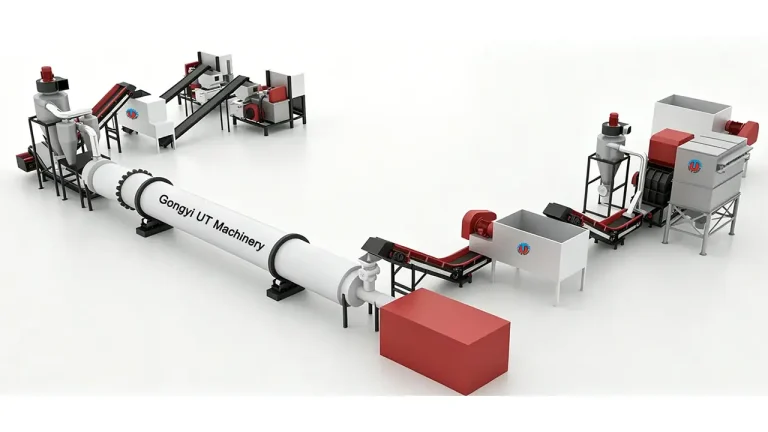
Briquette Production Line
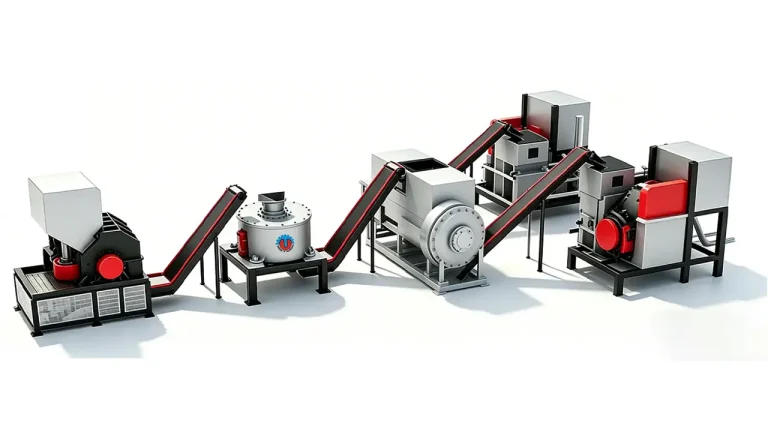
A briquette production line combines multiple machines to process raw materials from preparation to finished briquettes.
While a standalone briquette press can work for prepared materials, many industrial customers require a complete production system because raw materials often need additional treatment before pressing.
A typical briquette production line may include:
Raw Material → Crushing → Drying → Storage → Feeding → Briquetting → Finished Product
The exact configuration depends on the material type.
Biomass Briquette Production Line
A typical biomass briquetting line includes:
1. Crushing System
Reduces raw biomass materials into suitable particle sizes.
2. Drying System
Controls moisture content to improve briquette forming performance.
A [Rotary Dryer] is commonly used when raw materials contain excessive moisture.
3. Storage and Feeding System
Provides stable material supply to the briquette press.
4. Briquette Press
Compresses prepared biomass materials into finished briquettes.
5. Cooling and Packaging System
Handles finished briquettes after forming.
A complete [Briquette Production Line] can be configured according to raw materials, capacity requirements, and factory conditions.
Metal Briquetting Production Line
A metal briquetting system usually focuses on scrap preparation and recycling efficiency.
A typical process includes:
1. Scrap Collection
Metal chips are collected from machining equipment.
2. Crushing or Shredding
Large and tangled chips are processed into suitable sizes.
3. Oil Separation
Excess cutting fluid is removed before briquetting.
4. Hydraulic Briquetting
Prepared metal chips are compressed into dense briquettes.
5. Storage and Transportation
Finished briquettes are easier to handle compared with loose metal chips.
Standalone Machine or Complete Production Line?
The choice between a standalone briquette press and a complete line depends on the condition of the raw material.
A standalone machine may be suitable when:
- Materials are already prepared
- Moisture is controlled
- Feeding conditions are stable
A complete production line is recommended when:
- Raw materials vary significantly
- Additional crushing or drying is required
- Higher automation is needed
Before selecting equipment, customers should evaluate the complete material handling process rather than only the briquette press itself.
How to Choose a Briquette Press Machine
Selecting the right briquette press machine requires more than comparing machine models or production capacity. The equipment should be matched with the characteristics of the raw material, production requirements, and the final application of the briquettes.
A suitable briquetting system should consider the following factors:
- Material type and condition
- Required production capacity
- Briquette size and density requirements
- Factory working conditions
- Level of automation
1.Identify the Raw Material Characteristics
The first step is to understand the material that will be processed.
Different materials require different briquetting methods.
Metal Materials
For metal chips and machining residues, important factors include:
- Metal type
- Chip shape
- Chip size
- Oil or coolant content
- Daily scrap volume
For example:
- Aluminum chips generally have different compression characteristics compared with steel chips.
- Long and tangled turning chips may require crushing before pressing.
- Oily chips may require de-oiling equipment.
A [Metal Briquette Machine] should be selected according to the actual scrap condition rather than only the metal type.
Biomass Materials
For biomass and wood materials, important factors include:
- Moisture content
- Particle size
- Material density
- Fiber characteristics
Materials with excessive moisture may require drying before briquetting, while oversized particles may affect feeding stability.
A suitable [Biomass Briquette Machine] configuration depends on the specific raw material and production target.
2.Determine Required Production Capacity
Production capacity is one of the most important factors when selecting briquetting equipment.
Before purchasing a machine, customers should evaluate:
- Amount of waste generated per hour or per day
- Required operating hours
- Future production expansion plans
- Available factory space
For example:
A small woodworking workshop may only require a compact briquette press for several hours of daily operation.
A large manufacturing plant or biomass fuel producer may need a continuous production line with automatic feeding and material handling systems.
Choosing a machine with insufficient capacity may create production bottlenecks, while selecting excessive capacity can increase investment and operating costs.
3.Consider Briquette Size and Final Application
The required briquette shape and density depend on how the final product will be used.
Different applications may require different briquette forms, such as:
- Cylindrical briquettes
- Rectangular blocks
- Fuel logs
- Metal pucks
For example:
Metal recycling applications usually focus on high-density briquettes that are easy to store and transport.
Biomass fuel applications may focus on briquette shape, combustion characteristics, and packaging requirements.
4.Evaluate Factory Conditions
The installation environment also affects equipment selection.
Important factors include:
Available Space
A complete briquetting system may require additional equipment such as:
- Crushers
- Dryers
- Storage bins
- Conveyors
Therefore, factory layout should be considered before installation.
Power Supply
Different machine types require different electrical power configurations.
Automation Requirements
Customers should determine whether they need:
- Manual feeding
- Semi-automatic operation
- Fully automatic production
Briquette Press Machine Capacity
Briquette press capacity refers to the amount of material the machine can process within a specific time period.
Usually, capacity is measured in:
- kg/h
- ton/h
However, actual production output depends on several factors.
1.Material Characteristics
The same machine may achieve different outputs with different materials.
Factors include:
- Material density
- Moisture content
- Particle size
- Compression characteristics
For example:
Metal chips and biomass materials have completely different feeding and compression behavior, so their production capacity cannot be compared directly.
2.Machine Design
Capacity is affected by:
- Pressing force
- Compression chamber design
- Feeding system
- Motor power
- Operating cycle
A hydraulic briquette press designed for heavy metal processing may have a different capacity range compared with a mechanical biomass briquette press.
3.Production Requirements
Customers should evaluate whether the machine will operate:
- Several hours per day
- One production shift
- Continuous 24-hour operation
For continuous industrial production, a complete automated briquetting system may provide better production stability than a standalone machine.
Briquette Press Machine Cost Factors
The cost of a briquette press machine depends on many factors rather than only the machine model.
Important factors include:
- Machine type
- Raw material characteristics
- Production capacity
- Automation level
- Additional equipment requirements
1.Machine Type
Different pressing technologies have different manufacturing costs.
Hydraulic briquette presses, mechanical stamping presses, and complete production lines have different structures and configurations.
2.Material Preparation Equipment
Some materials cannot be directly fed into the briquette press.
Additional equipment may be required, such as:
For metal materials:
- Chip crusher
- De-oiling equipment
- Storage system
For biomass materials:
- Crusher
- Dryer
- Conveyor
- Storage bin
These systems affect the total project investment.
3.Production Capacity
Higher capacity systems usually require:
- Larger motors
- Stronger structures
- More automated handling systems
Therefore, production requirements should be clearly defined before equipment selection.
Briquette Press Maintenance
Proper maintenance helps maintain stable briquette quality and extend equipment service life.
Although maintenance requirements vary depending on machine type and material, common maintenance practices include:
1.Regular Inspection
Operators should regularly check:
- Hydraulic system condition
- Electrical components
- Wear parts
- Feeding system
- Compression chamber
Early detection of abnormal conditions helps prevent unexpected downtime.
2.Wear Part Management
Parts exposed to continuous compression may experience wear over time.
Common inspection areas include:
- Dies
- Compression chambers
- Pistons
- Feeding components
The replacement cycle depends on:
- Material abrasiveness
- Operating hours
- Machine design
3.Material Preparation Control
Many operating problems are related to unsuitable raw materials rather than the machine itself.
For example:
- Excessive moisture can affect biomass briquette quality.
- Oversized metal chips can cause feeding problems.
- Foreign materials may increase wear.
Maintaining proper material preparation is an important part of stable briquetting operation.
Conclusion
A briquette press machine provides an effective method for converting loose industrial waste materials into compact briquettes that are easier to handle, transport, recycle, or utilize.
However, successful briquetting depends on selecting equipment that matches the material characteristics and production requirements.
Metal chips, biomass residues, wood waste, charcoal, and coal materials all have different processing requirements. Factors such as compression method, material preparation, production capacity, and automation level should be considered before choosing a machine.
By understanding how briquette presses work, the differences between machine types, and the requirements of different materials, manufacturers can select a suitable briquetting system for their production needs.
For specific applications, explore our:
- [Metal Briquette Machine] for metal chip recycling applications
- [Hydraulic Biomass Briquette Press] for biomass compression requirements
- [Wood Briquette Machine] for wood waste processing
- [Briquette Production Line] for complete briquetting systems
Contact our engineering team to discuss your material characteristics, production requirements, and suitable briquetting equipment configuration.
Frequently Asked Questions About Briquette Press Machines
What materials can a briquette press machine process?
A briquette press machine can process various materials depending on its design, including metal chips, sawdust, wood waste, agricultural residues, charcoal powder, and coal fines.
The machine type should be selected according to the material characteristics.
What is the difference between a briquette press and a briquette machine?
In many industrial applications, the terms are used interchangeably.
A briquette press usually emphasizes the compression process, while briquette machine is a broader term that may include the complete equipment system.
Can one briquette press process both metal and biomass materials?
Generally, metal and biomass materials require different machine configurations because their physical properties are different.
Metal materials usually require higher compression force, while biomass materials require moisture and particle size control.
A machine should be selected according to the specific material application.
Do biomass materials need drying before briquetting?
Many biomass materials require moisture control before pressing.
The required moisture level depends on the material type and machine design. Materials with excessive moisture may require drying equipment before entering the briquette press.
What capacity briquette press do I need?
The required capacity depends on:
- Amount of raw material available
- Operating hours
- Desired output
- Future production requirements
A supplier should evaluate the material condition and production target before recommending a machine.
How long does a briquette press machine last?
Machine service life depends on:
- Machine design
- Operating conditions
- Material characteristics
- Maintenance quality
Regular inspection and proper operation help extend equipment service life.
Should I buy a standalone briquette press or a complete production line?
A standalone machine is suitable when raw materials are already prepared.
A complete production line is recommended when materials require crushing, drying, storage, feeding, or other preparation processes.