How to Choose the Right Briquetting Machine for Different Metal Chips
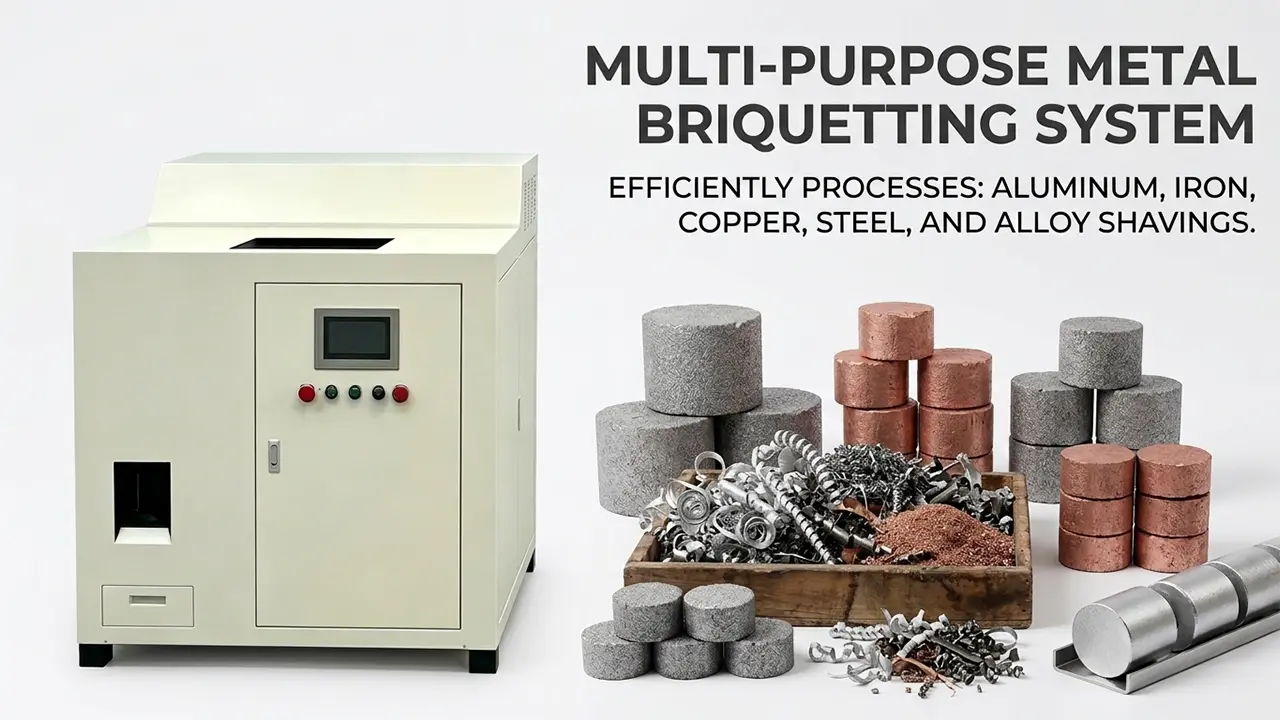
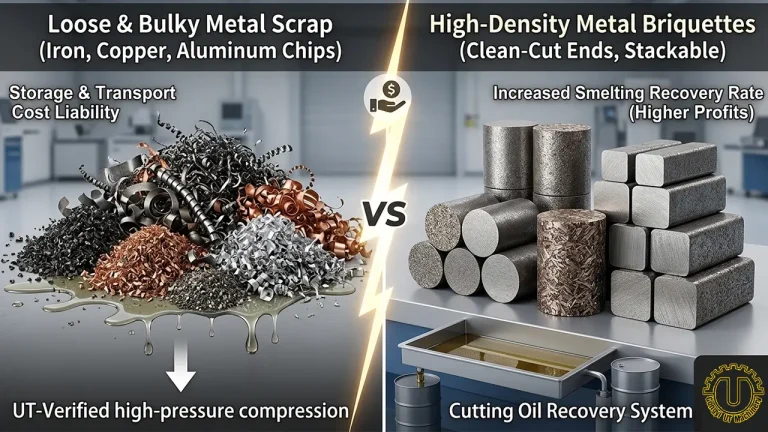
UT Machinery delivers material-specific hydraulic briquetting solutions engineered to convert loose industrial metal scrap into high-density profit assets.
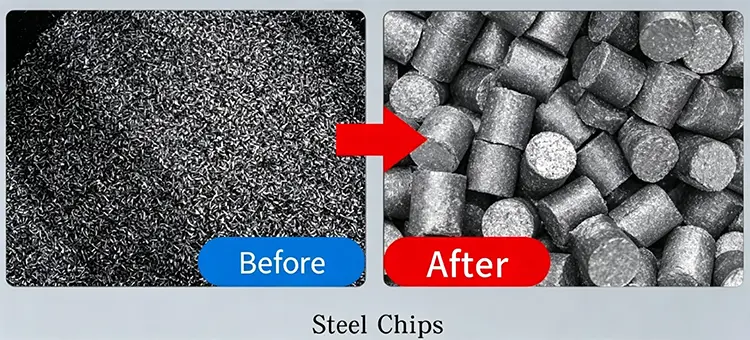
Material-Specific Engineering: Tailored press frameworks that eliminate specific material physics bottlenecks—preventing material bridging in springy steel turnings and mold powder leakage in abrasive cast iron borings.
Maximum Fluid Recovery: Features an integrated extraction tray system that squeezes out and reclaims up to 85% of premium cutting oils and cooling emulsions for rapid workshop recycling.
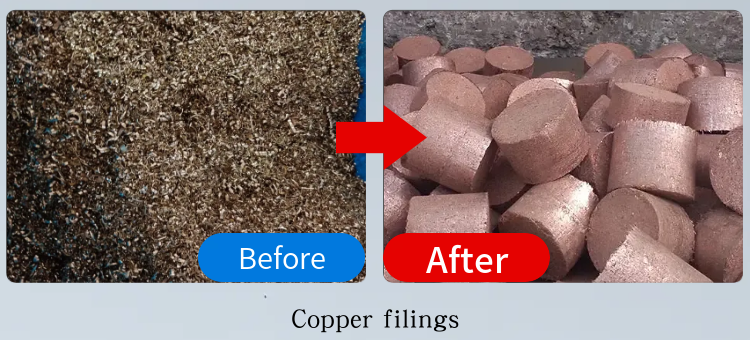
Optimized Furnace ROI: Packs lightweight and ductile non-ferrous metals (copper, brass, aluminum) into rock-solid blocks that sink instantly in melting crucibles, reducing burn and oxidation losses by up to 90%.
Metal chip briquetting is a core process in modern CNC machining, metal fabrication, and foundry recycling systems. It converts loose machining waste such as turnings, swarf, and borings into high-density briquettes for efficient melting and storage.
However, different metals behave completely differently under pressure.
Copper, aluminum, steel, cast iron, and brass all vary in:
Density and compressibility
Oil and coolant content
Elastic deformation behavior
Oxidation sensitivity
Furnace melting efficiency
👉 That is why selecting the correct metal chip briquetting machine is not a standard equipment decision—it is a material engineering decision.
1. Why One Machine Cannot Handle All Metal Chips
From an engineering perspective, metal chips are not waste—they are deformed metallic structures with residual stress and fluid content.
A mismatch between material and machine leads to:
❌ Common failure outcomes:
Briquettes cracking during transport
Oil leakage contaminating workshop floors
Hydraulic seal damage from abrasive powders
Furnace burn loss due to low density blocks
Feeding system blockage (especially long turnings)
👉 Therefore, machine selection must be based on material physics + production workflow, not price alone.
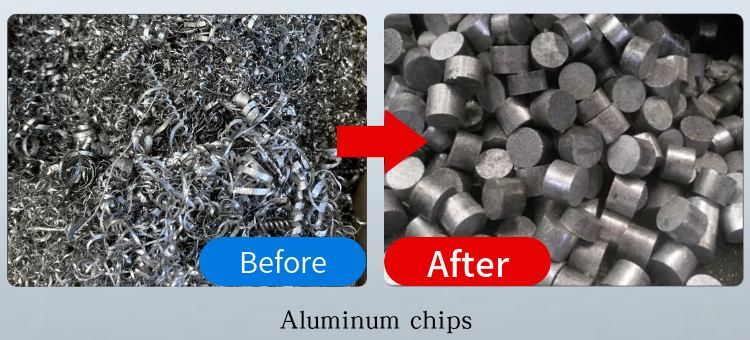
Loose aluminum chips behave like “air containers”, causing:
Explosion risk during furnace charging
Severe oxidation loss
Low melting efficiency
Engineering Solution
The machine must provide:
Rapid compression cycle
Deep cavity compaction force
Air and moisture expulsion system
Volume Reduction up to 1:90: Transforming springy, lightweight aluminum shavings into solid furnace-ready cylindrical briquettes to prevent melt oxidation.
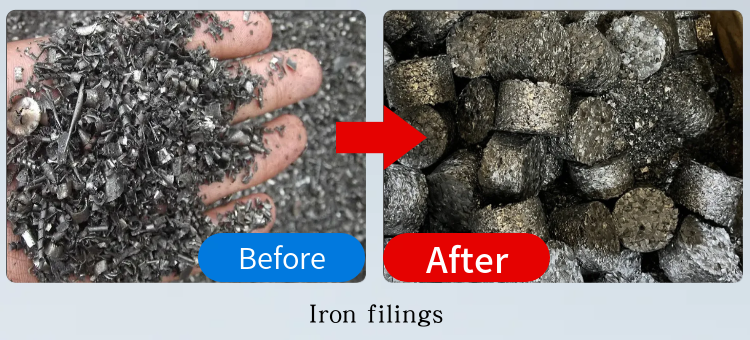
Zero Powder Leakage: Compressing powdery, fine cast iron filings into rock-solid briquettes that sink instantly in melting crucibles, eliminating chimney updraft loss.
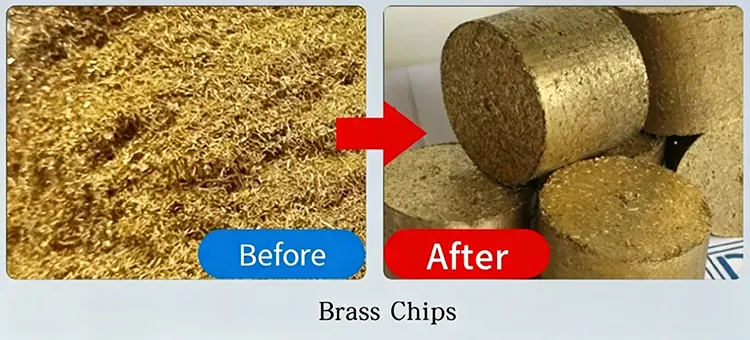
Valuable Metal Recovery: Compressing oily brass milling shavings into solid briquettes while capturing up to 85% of high-end cooling lubricants for workshop reuse.
Machine Configuration
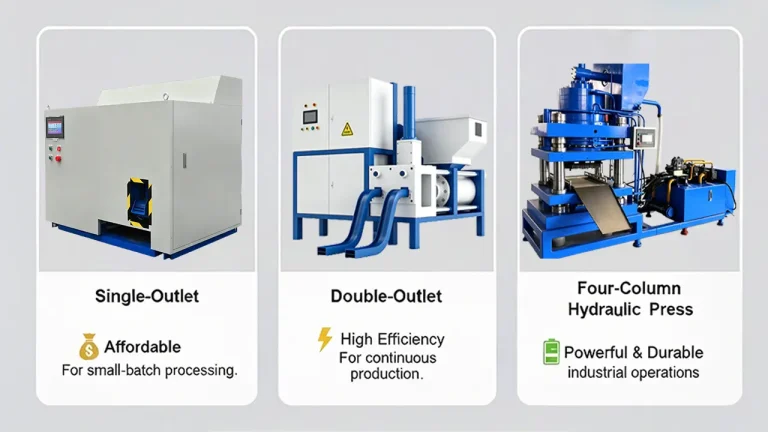
Hydraulic briquetting press with oil filtration drawer
Die wear occurs rapidly under standard steel molds
High compression resistance required
Engineering Solution
Reinforced alloy wear plates
High-force hydraulic system
Heat-treated structural frame
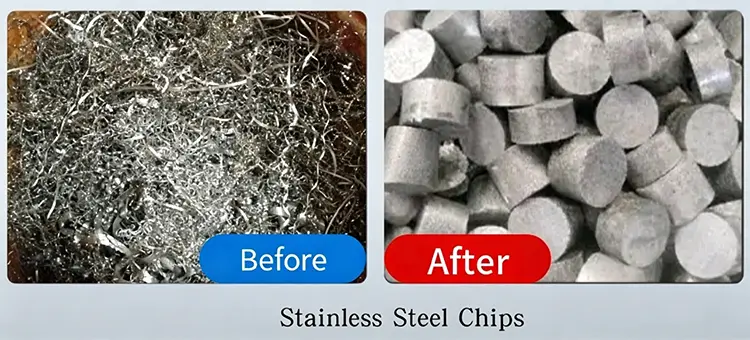
Conquering High Friction: Transforming tough, abrasive 304/316 stainless steel turnings into uniform blocks via an alloy-lined compression chamber to eliminate severe tool and mold wear.
Machine Configuration
Heavy-duty stainless steel briquette press
Alloy-lined compression chamber
High-tonnage hydraulic system
8. Production Workflow Selection Logic
To correctly select a briquetting machine, evaluate:
❌ Using low-pressure press for steel chips ❌ Ignoring oxidation in aluminum recycling ❌ Using one die for all materials ❌ No oil separation system for wet chips ❌ Underestimating frame fatigue stress
Conclusion
Selecting the right metal chip briquetting machine is not a simple equipment purchase—it is a material engineering optimization decision.
The correct system improves:
Furnace efficiency
Scrap value recovery
Workshop safety
Operational cost
Production automation level
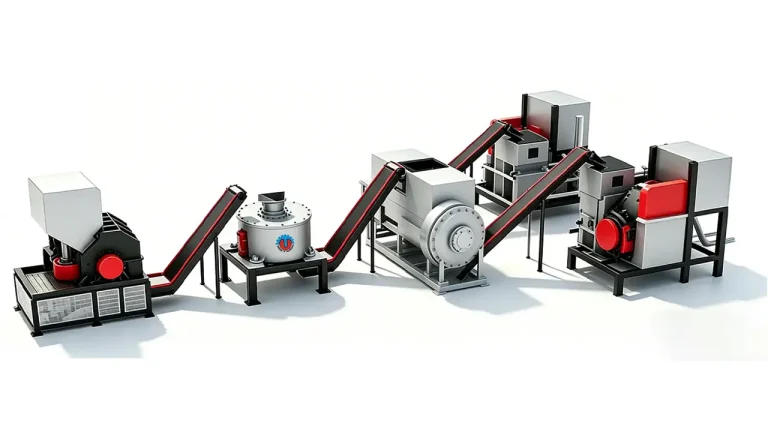
👉 The best solution is always material-specific machine + integrated workflow design, not generic equipment selection.